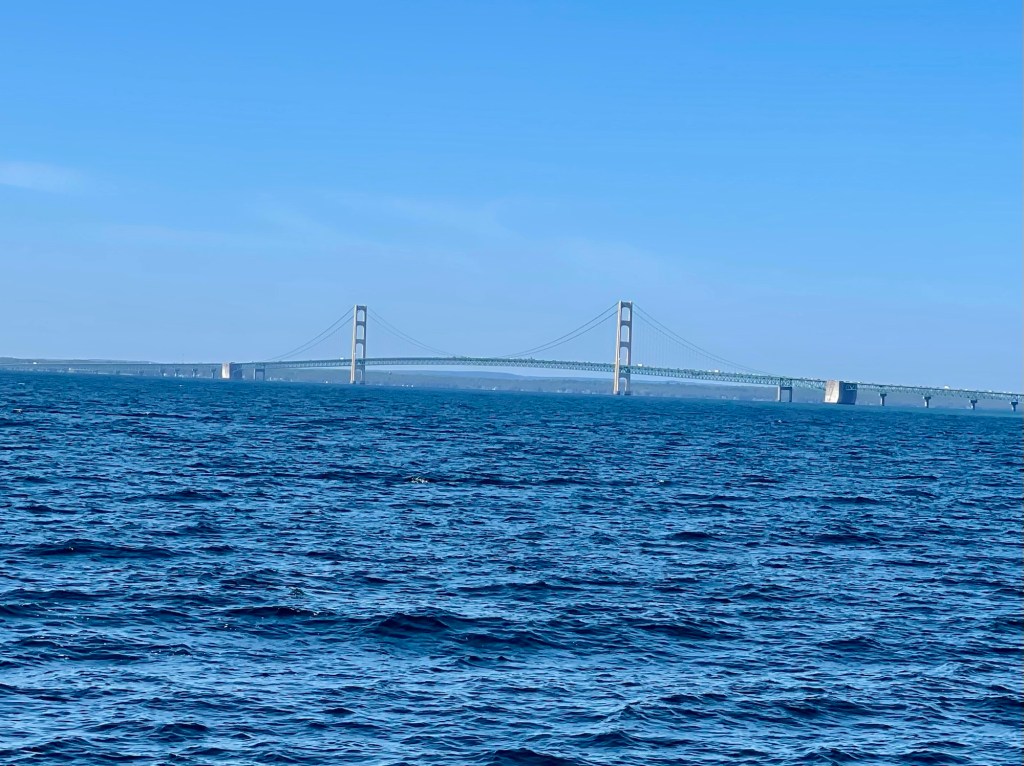
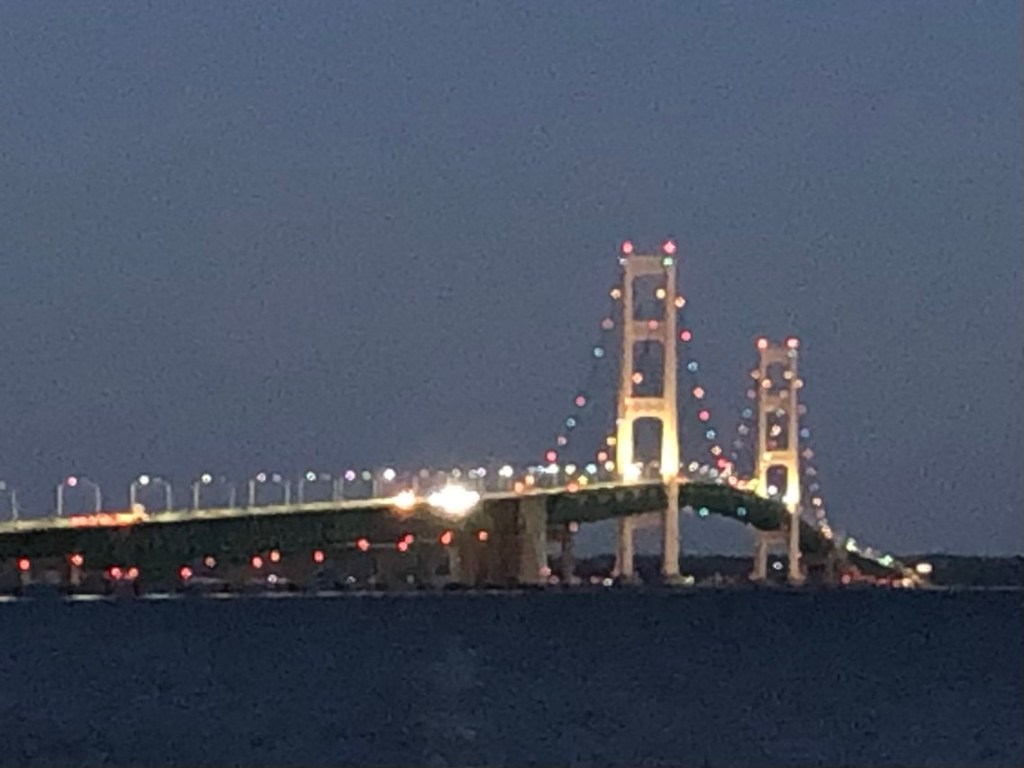
As I approached the Mackinac Bridge for the first time, I felt a sense of awe. There stood “The Mighty Mac,” a beacon of human ingenuity, rising majestically against the horizon. Stretching five miles across the Straits of Mackinac, this stunning engineering masterpiece connects Michigan’s Lower and Upper Peninsulas. Two towering 552-foot-high pillars support an intricate web of suspension cables that contrast sharply against the sky. The Mighty Mac is not merely a bridge; it’s a testament to human achievement and a sight to behold.
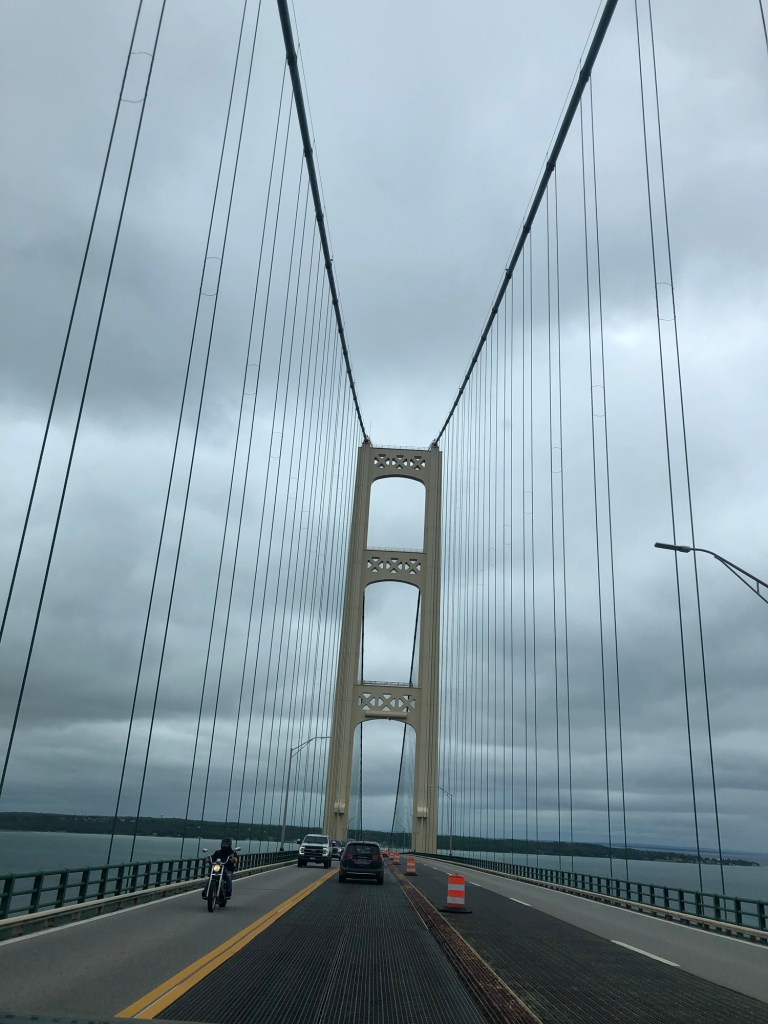
Towing our travel trailer up the bridge’s incline was both thrilling and nerve-wracking. As we approached the center, the wind picked up, causing the trailer to sway slightly and my grip on the wheel to tighten. Yet, my anxiety melted when I looked out at the breathtaking view below. To the west, the deep blue waters of Lake Michigan stretched out, while to the east lay the expanse of Lake Huron. In that moment, I felt like we were crossing into a whole new world.
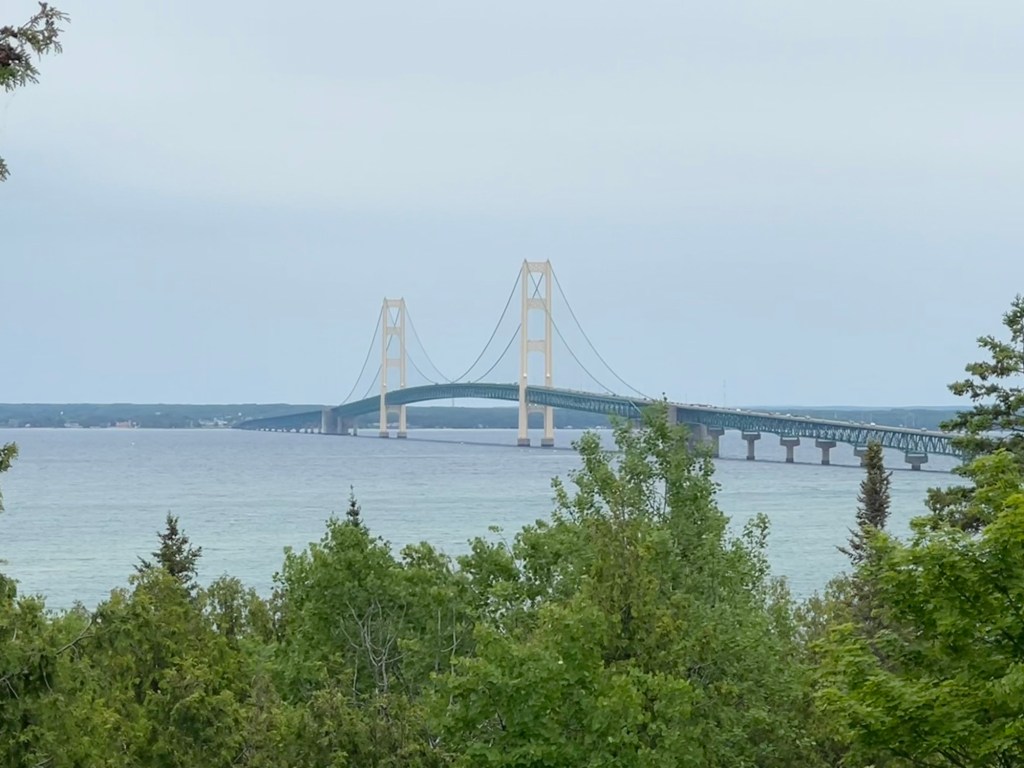
Our home for the next four nights was Straits State Park, nestled near the foot of the Mackinac Bridge. Covering 181 acres, the park offers 270 campsites. We settled into site 191, an electric-only site. The park features vantage points perfect for viewing the mighty Mackinac Bridge, but we chose this campground in St. Ignace for its proximity to the Mackinac Island ferries. Going to Mackinac Island is a must-do on our Michigan bucket list.
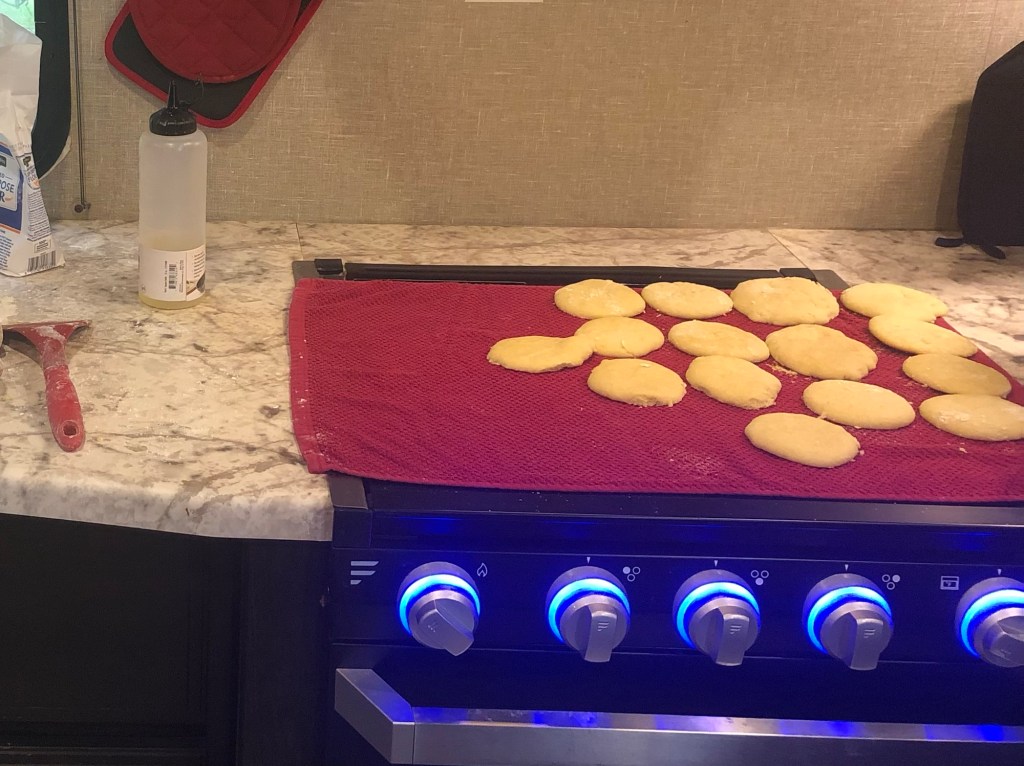
It was unfortunate the weather turned bad shortly after our arrival. Cold, rainy days followed, dampening our excitement. On that first day, Grammi didn’t even step outside the warmth of the camper. Instead, she spent the day sweeping and cleaning, rearranging the under-bed storage, baking cookies, and meal-prepping dinners—all while still in her pajamas.
The next day, despite the unpleasant weather, we felt a bit stir-crazy and decided to venture out for the sake of our sanity. We drove around in the rain, exploring the streets of St. Ignace. We did some laundry at the local laundromat, went grocery shopping, and made a stop at the famous Lehto’s to try our first-ever pasty (pronounced “pass-tee”).
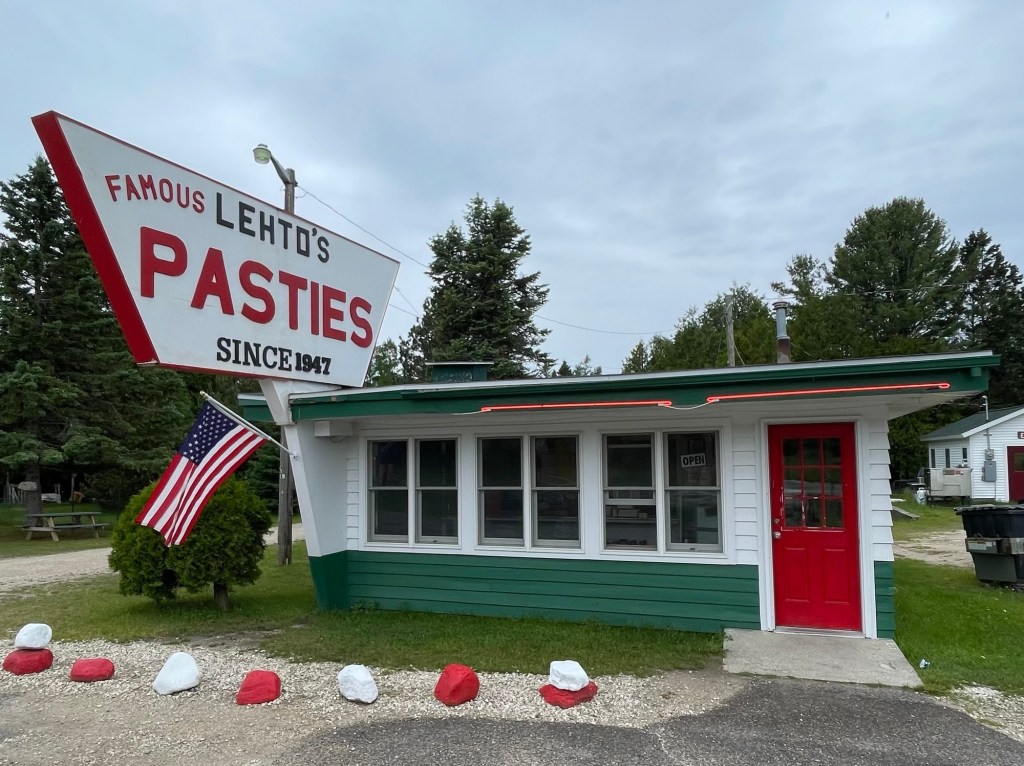
The pasty, we learned, is a traditional savory pastry cherished in Michigan’s Upper Peninsula. Originating from England, this dish was brought to the region by Cornish miners in the 19th century. It is a handheld, one-person meal popular among miners because of its portability. Made with a sturdy pastry crust filled with a mixture of meat (usually beef), potatoes, rutabagas, and onions, it is baked until the crust is golden and flaky. The design—with a sizable crimped crust on the side used as a handle—allowed miners to hold them with dirty hands while keeping the food clean.
Hoping to find a picnic table under a covered pavilion, we sought out a park with a view overlooking the Straits of Mackinaw. We found a park with a picnic table and a stunning view, but no pavilion. Unfortunately, the continuous rain dashed our hopes, forcing us to enjoy our pasties inside the truck. Our “Today’s Lunch Spot” photo was taken from the cozy confines of the vehicle.
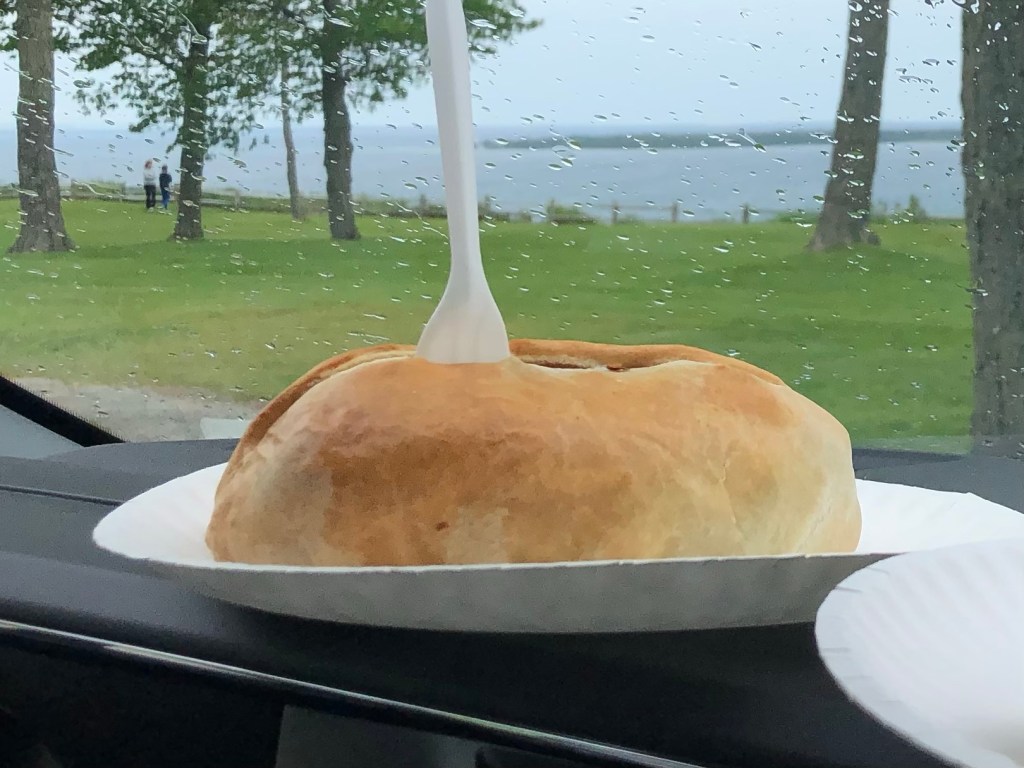
The pasty was indeed tasty. reminiscent of an empanada but larger and with a thicker crust. The pasty’s crust, similar to a pie crust, was flaky and crispy on the outside. I loved that the filling had more beef than vegetables—a definite plus in my book. It’s easy to see why this meal was favored by miners or anyone else that carried a lunchpail. As they know here in the U. P., this easy to hold meal remains a convenient fast food still loved to this day.
We approached our upcoming visit to Mackinac Island with the idea that one day might be enough to see the sights, and if not, we would have an extra day just in case. However, the rainy weather delayed us from going to the island, so now we have only one day to explore.
The ferry ride to Mackinac Island was bumpy, with the weather still not ideal. Strong winds kicked up choppy waves, causing the captain the forego the usual route under the Mackinac Bride. From afar, he narrated facts about the bridge, but his words were lost in the wind and the hum of the motors.
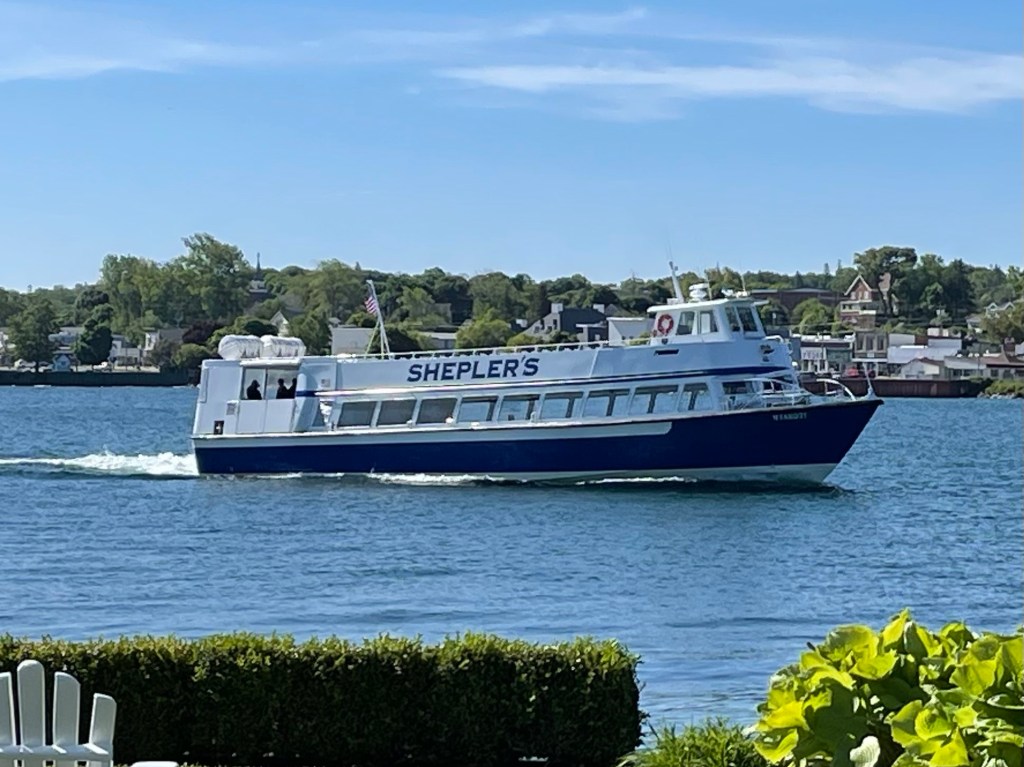
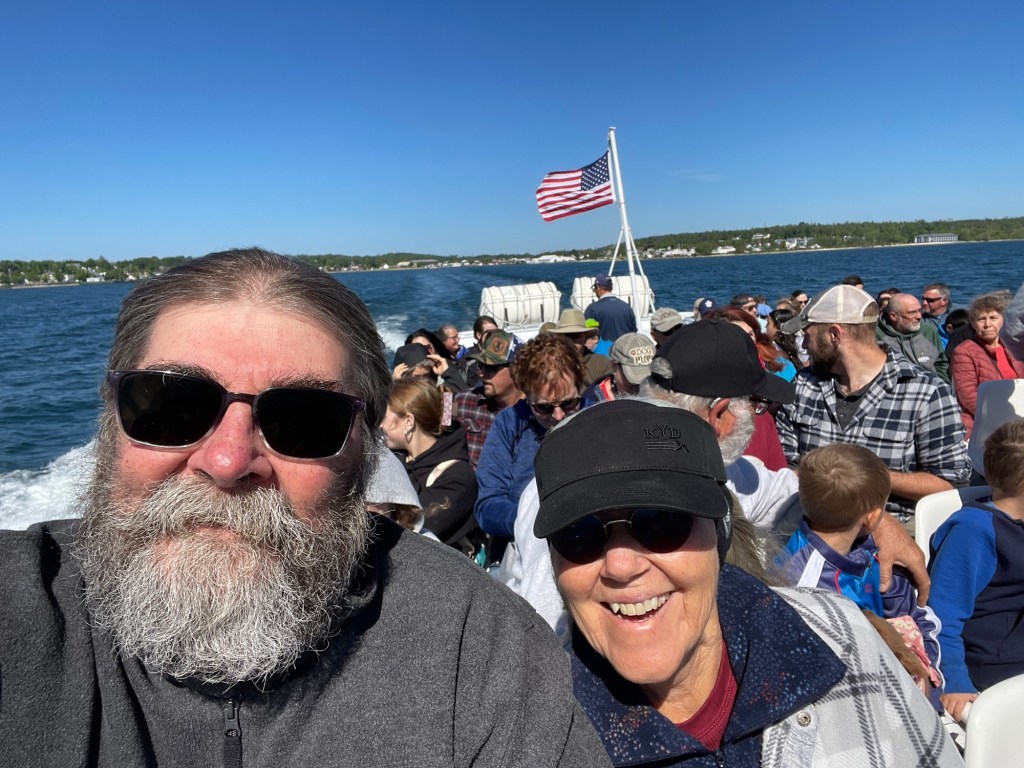
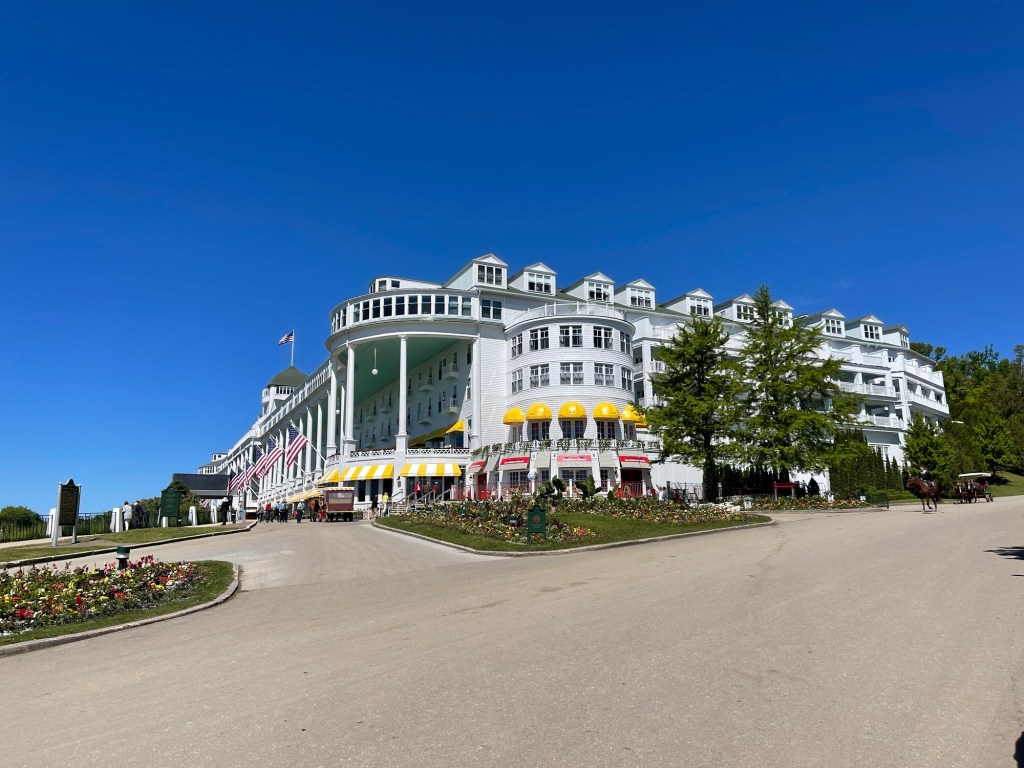
The anticipation grew as the ferry neared the bustling harbor. The Grand Hotel, perched high on the bluffs, dominated the view.
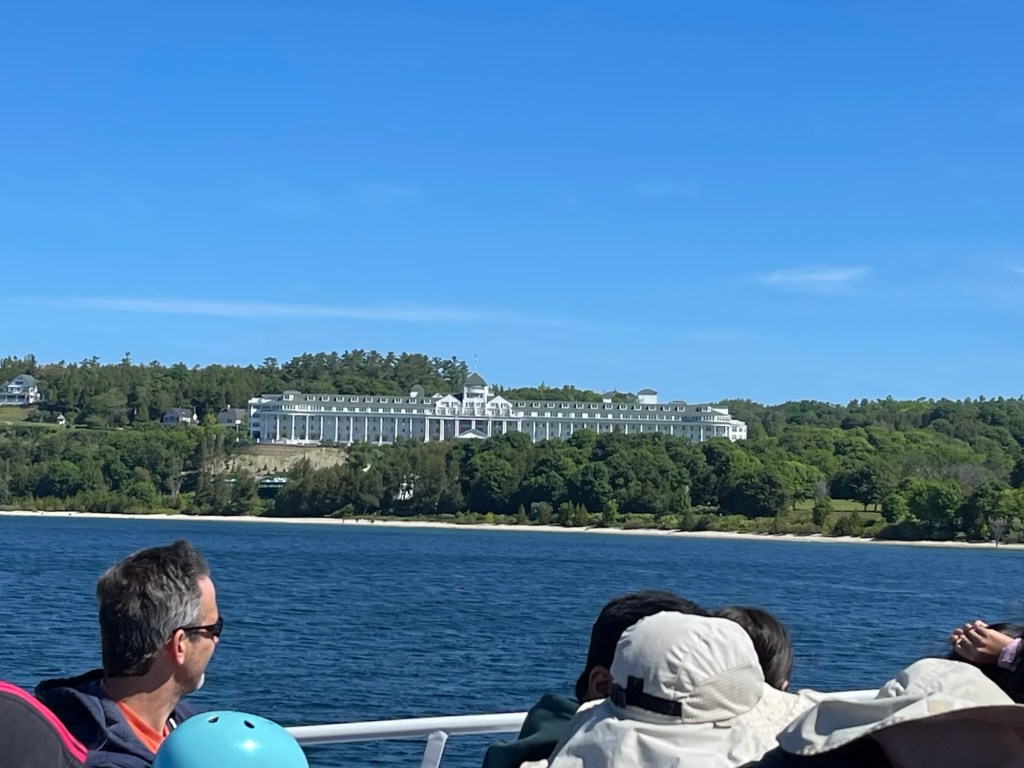
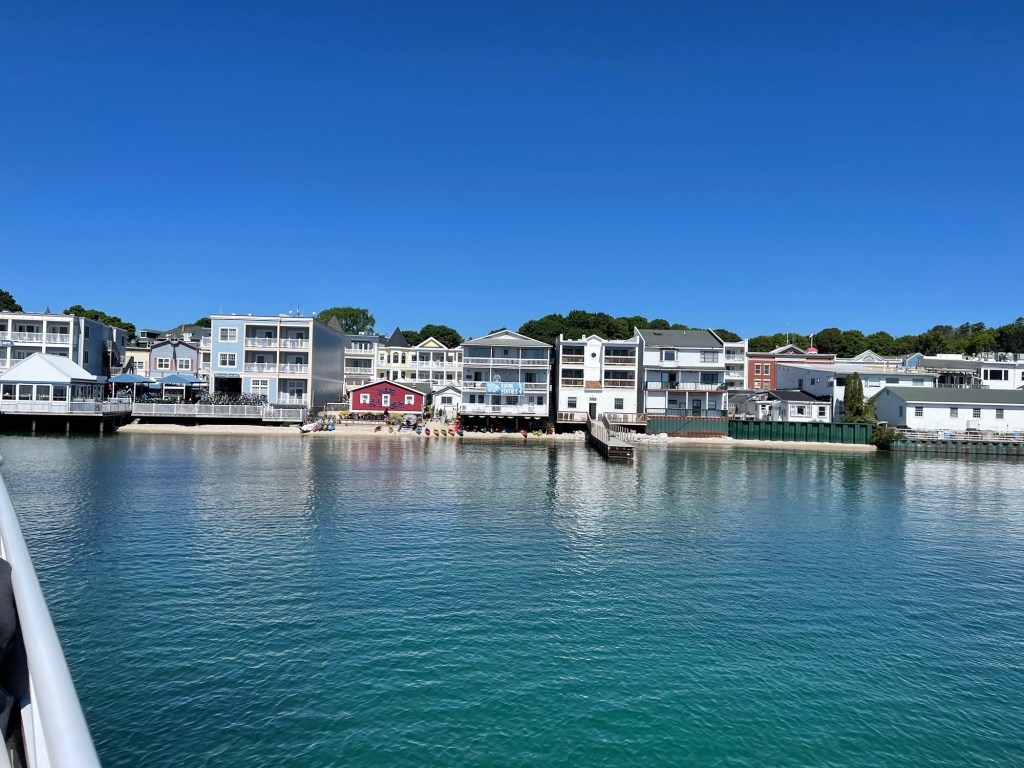
Stepping off the ferry, we were immediately transported to a different era where horse-drawn carriages, cyclists, and pedestrians replaced the usual cacophony of cars and buses. Indeed, the town had a distinct sound and invigorating vibe that was a refreshing change.
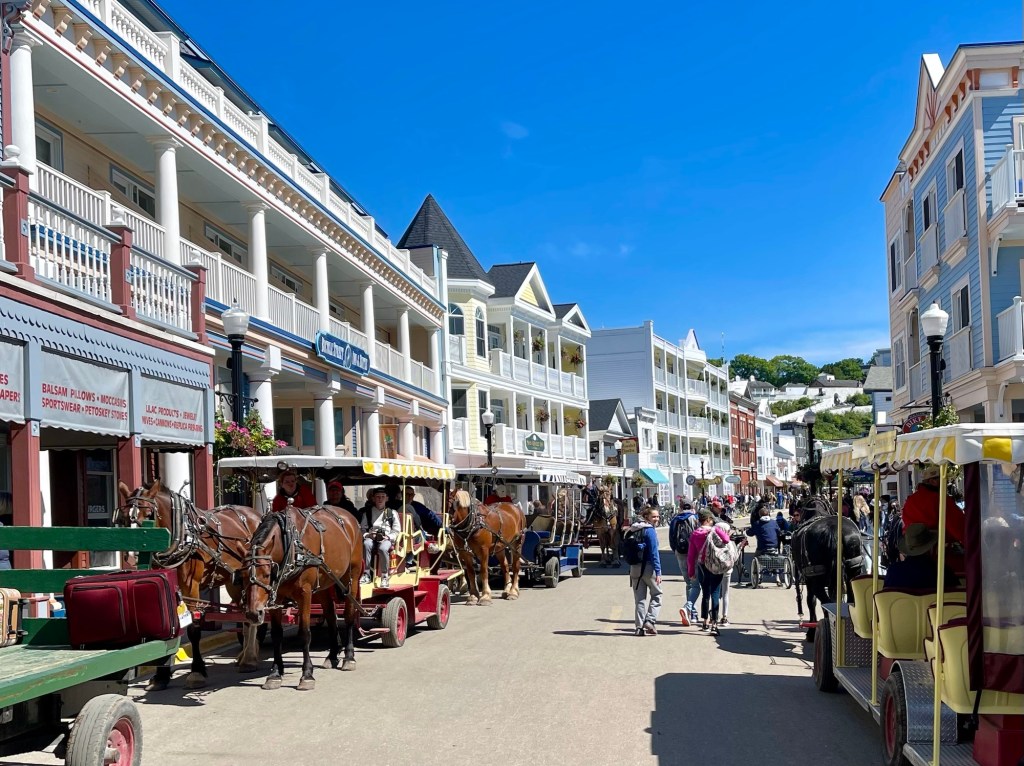
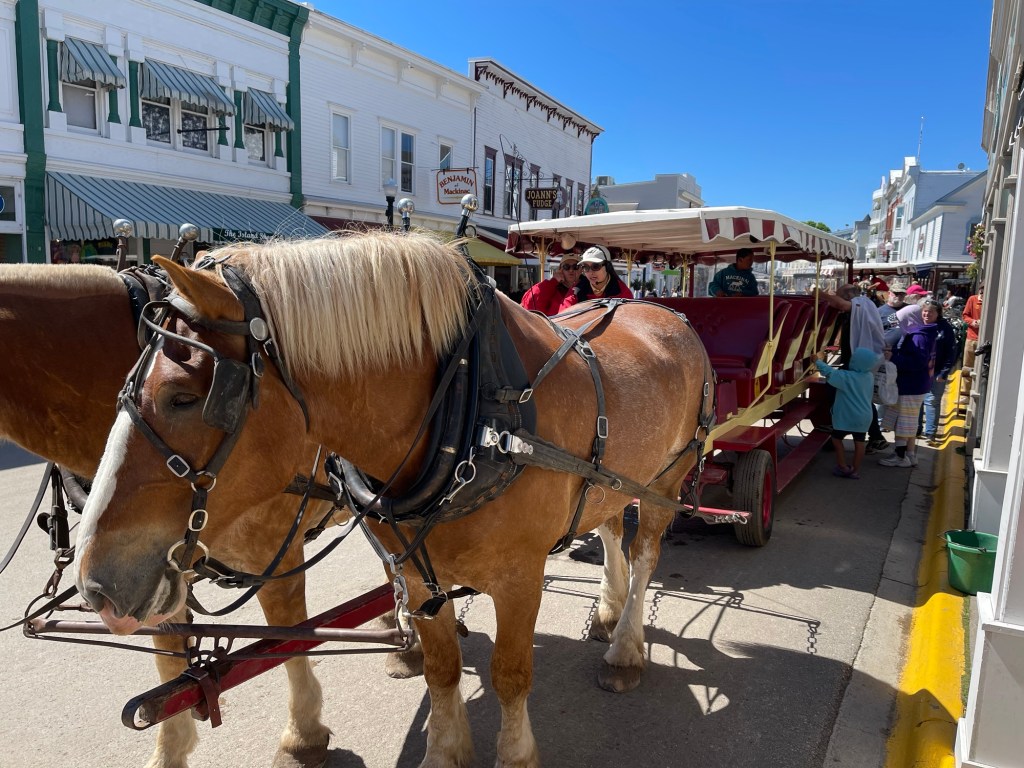
We started with a horse-drawn carriage tour to experience as much of the island’s scenery as possible. Our beautifully adorned carriage, carrying about twenty people, was effortlessly pulled along by two large, muscular horses. As we rode through town, our guide pointed out many historic sites.
We passed the beautiful Grand Hotel with its enormous veranda. I cherished the thought of returning later for some relaxing porch sitting.
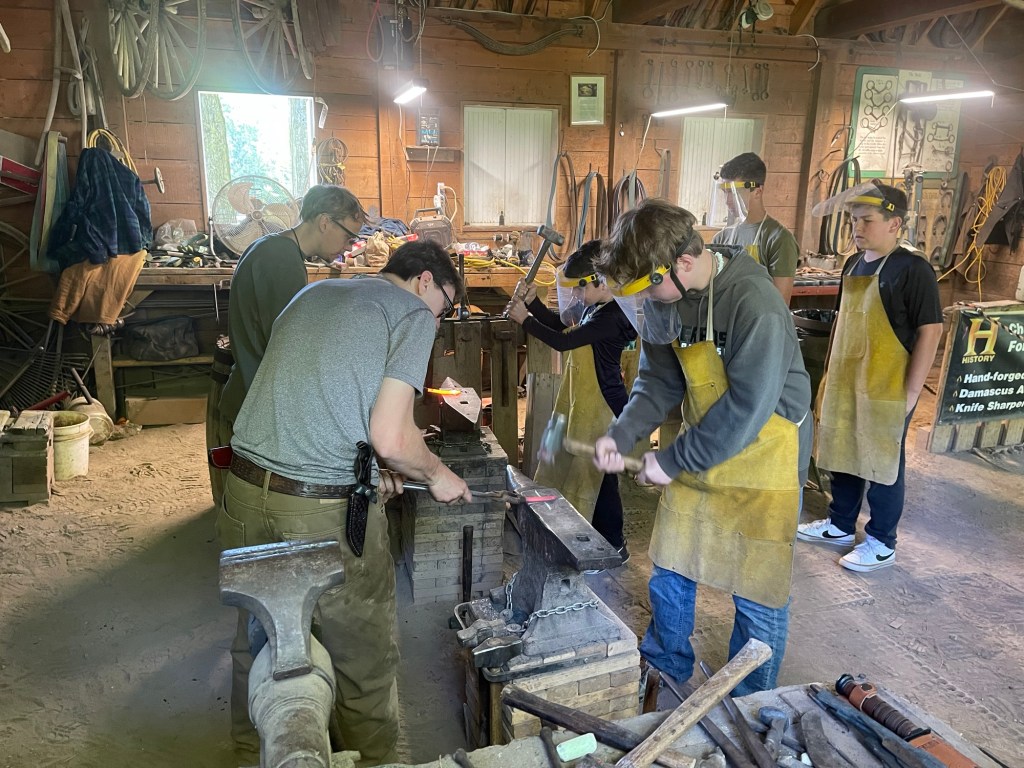
Our first stop on the carriage tour was Surrey Hill, located in the heart of the island. This area features a gift shop, a food counter, and several attractions, such as the Wings of Mackinaw Butterfly Conservatory, the Forge a Memory blacksmith shop, and the Grand Hotel Stables and Carriage Museum. We skipped the butterfly conservatory but made sure to stop at the blacksmith shop, where we watched blacksmiths help some boys forge their own knife blades. What a unique experience this must have been for these young lads as they “forged a memory” while pounding the red-hot iron on the anvil.
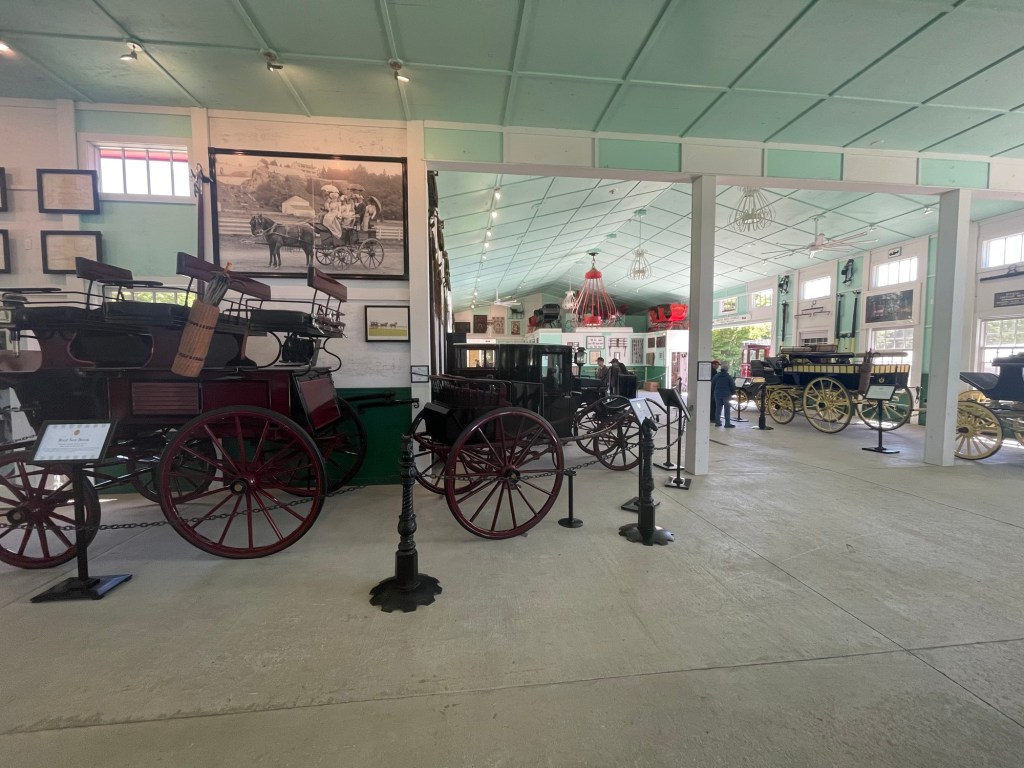
The Stable and Carriage Museum was equally fascinating, showcasing some horses and an impressive collection of historic carriages and sleighs. Once an essential piece of transportation on the island, these beautifully restored carriages provide a glimpse into Mackinac Island’s history without motorized vehicles. The horses, also an intricate part of the transportation story, are well care for. Standing next to one gave a real perspective on their size—the middle of its back stood taller than me, and I’m six feet tall.
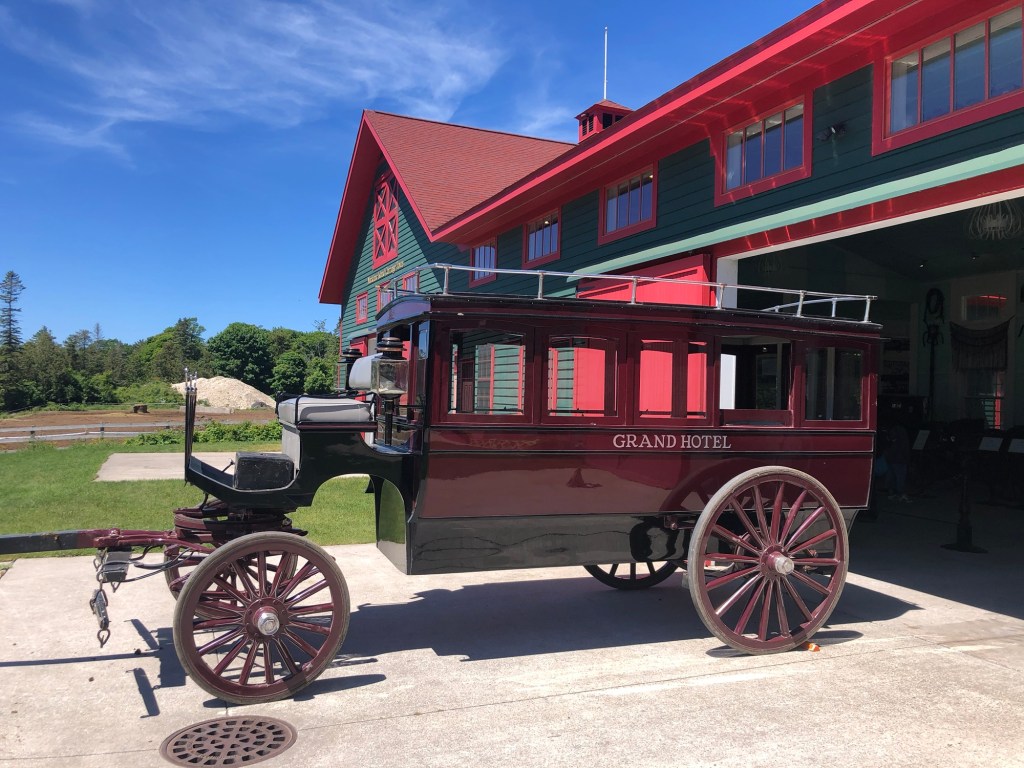
At Surrey Hill, we hopped on another carriage, this one pulled by a team of three horses, for a ride through the lush forest of the state park. Imagine, if you will, a time long ago when travelers journeyed by horse-drawn carriage through dense forest, with bandits potentially hiding behind every tree. Okay, there were probably no bandits around, but the scene certainly evoked a sense of adventures and intrigue.

Our next stop along the carriage tour was at Arch Rock. From the upper viewing platforms, we were awestruck by the island’s iconic limestone formation. Towering 146 feet high and stretching 50 feet wide, Arch Rock provided a stunning vista of Lake Huron and the surrounding landscape. The natural beauty of this site left us truly captivated.

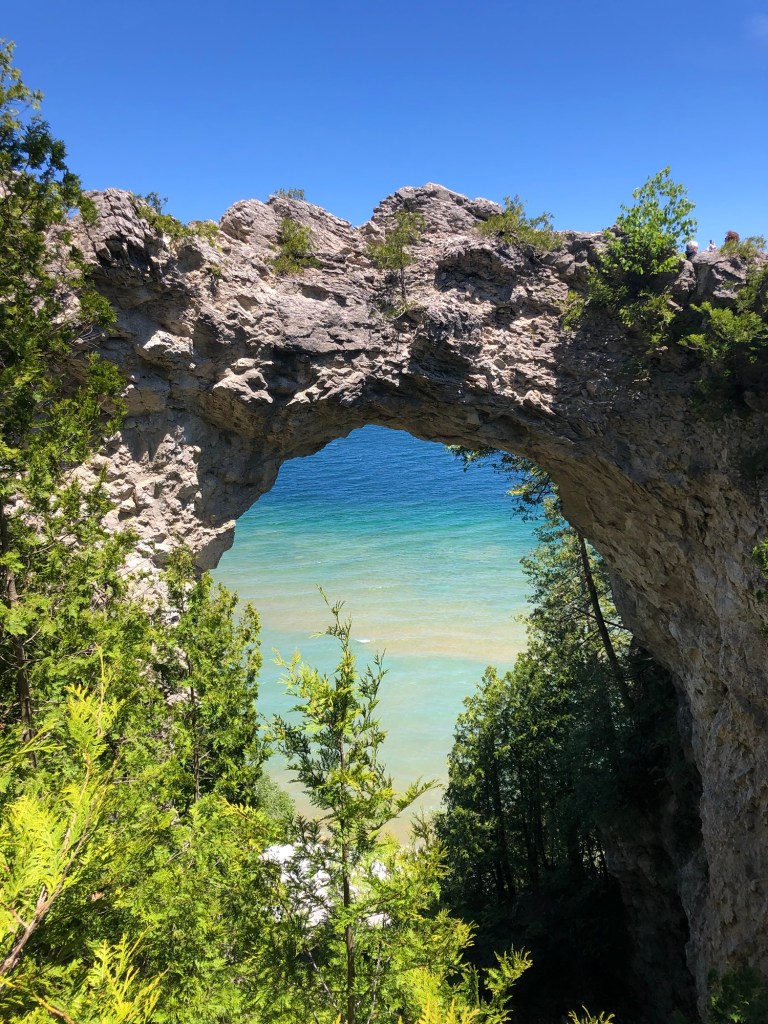
Fort Mackinaw was our next planned stop, but it was lunchtime, so we stayed on the carriage and returned to Surrey Hill. There, we transferred to another carriage for the ride back down into town. Following our driver’s suggestion, we enjoyed a delightful meal on the outside deck at Mary’s Bistro Draught House, with a lovely view of the harbor.

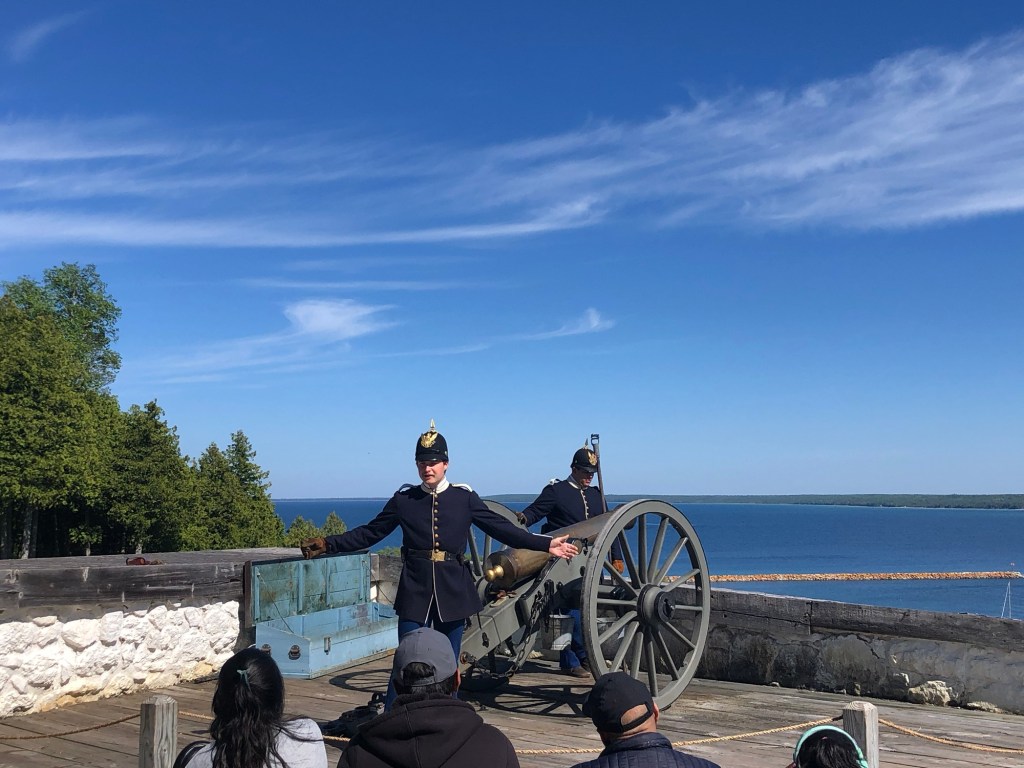
After lunch, we leisurely strolled through the shops, slowly making our way back to the fort on the bluff. Fort Mackinaw, built in 1780 by the British during the American Revolutionary War, was constructed to control the vital Straits of Mackinac and has since seen its share of history. After the Revolutionary War, it was ceded to the United States, only to be recaptured by the British during the War of 1812. Once again, it was returned to the U.S. after the Treaty of Ghent in 1815. During the Civil War it served as a training ground and recruitments center. Fort Mackinac was officially closed as a military post and transitioned into a state park in 1895.

Today, the fort operates as a museum and has a small entrance fee. The site includes many original buildings and features exhibits on life at the fort and its military history. We were thrilled to witness a reenactment demonstration of the cannon firing, aimed at an imaginary target on Lake Huron, the blast echoed through the town below.
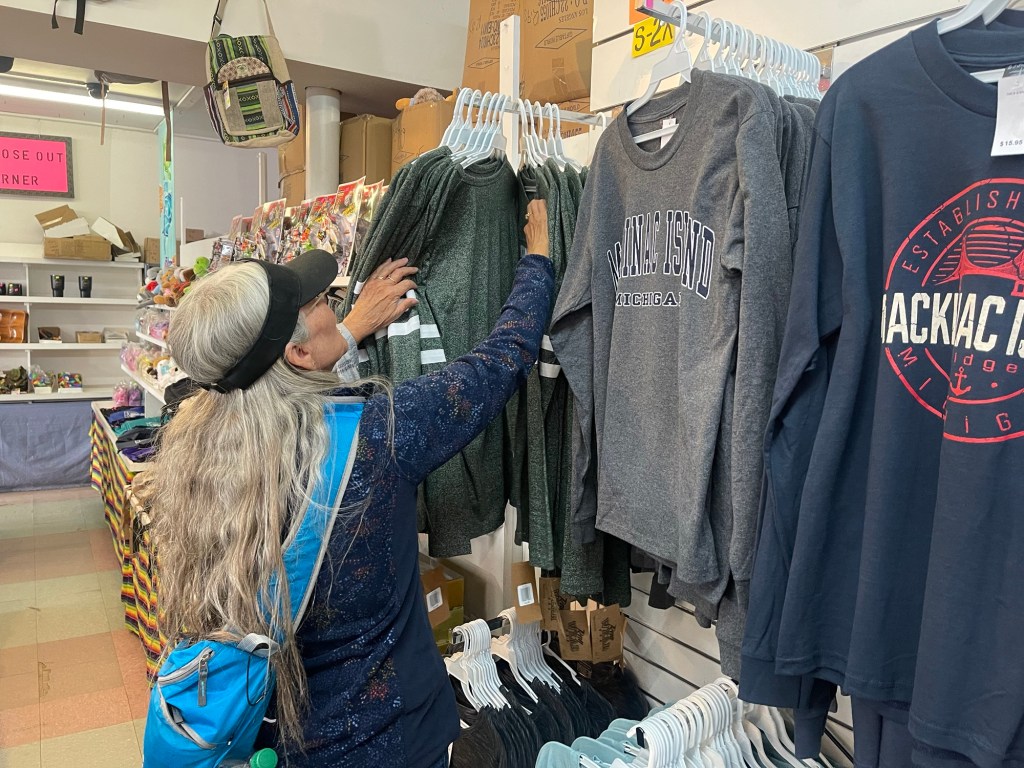
Afterward, we took some time to sit on a low wall at Marquette Park to relax and take in the surroundings. While gazing across the harbor at Lake Huron, we heard the sounds of bicycle bells and the clippity-clop of horse hooves wafting through the air. Before taking the evening boat ride back to the mainland, we made sure to buy some famous Mackinac fudge to cap off our visit

In retrospect, one day simply wasn’t enough time to fully experience the essence of the island. We missed going back to the Grand Hotel for some relaxing porch sitting, and renting bicycles for a bike ride around the island—two activities I hope to do if I ever come back. Nevertheless, the time we spent was thoroughly enjoyable.
Until next time—Happy days and safe travels.
 The Adventures of Grammi and Grampa
I doubt that I will ever get to Mackinac Island it is indeed enjoyable to read about your visit. It’s a bit like sitting in the back seat and watching from a distance with your writing. Thanks for the view.
LikeLiked by 1 person
Thanks for the lovely tour of Mackinac Island. I have visited there a couple of times. My dad was from Michigan and actually worked on the island after graduating high school. I’m going to make note of the lunch spot for our next visit!
LikeLiked by 1 person
The island was filled with young college age kids working summer jobs. Our carriage drive was was a student from Pennsylvania that had never worked with horses prior to getting the job. It was here first week driving alone after a two week training. Learning of you dad tells me this has been a long standing practice. Have a good day.
LikeLiked by 1 person