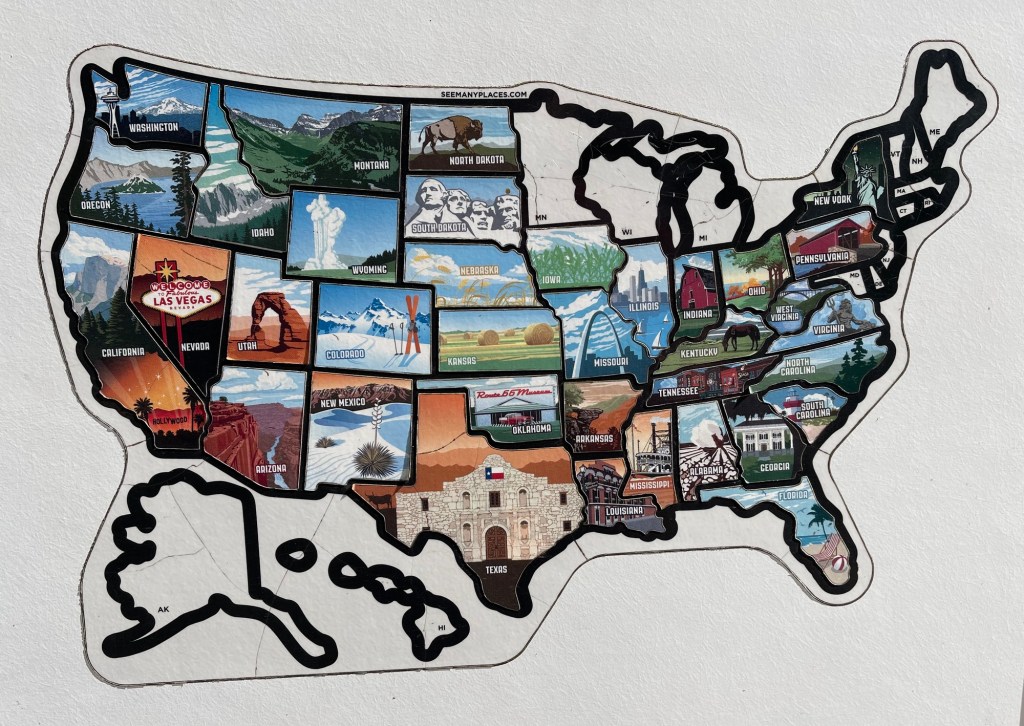
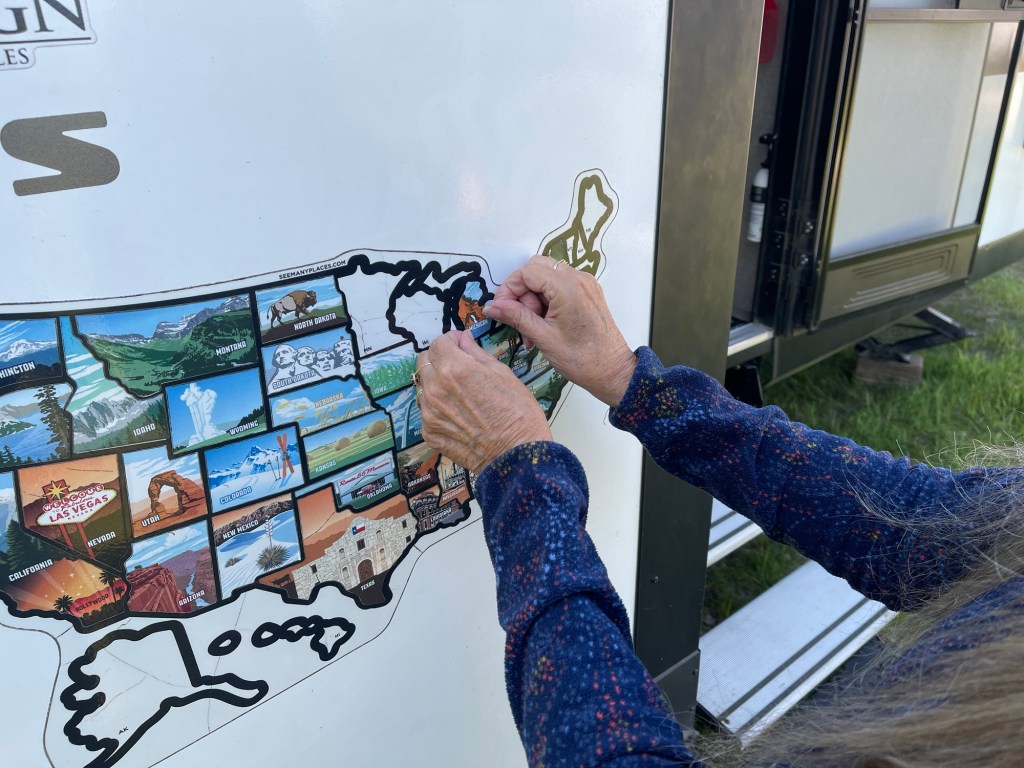
We have one of those maps stuck to the side of our camper. I’m sure you’ve seen them before. The kind where we add a sticker for every state we’ve visited. After five years of crisscrossing the continuous United States and gradually filling in our map, a gap remains: three prominent states at the top stand out. While there are a few states in the northeast that we have yet to visit, they seem minor and inconspicuous compared to the vast expanses of Michigan, Minnesota, and Wisconsin. This summer, we’re on a mission to visit these three states to correct this glaring void.
Heading north from Indiana, we entered the first of the three. Until this point, we had never set foot in Michigan—ever. The opportunity hadn’t arisen. Truth be told, if it wasn’t for the sign at the state line and the Google Maps lady announcing, “Welcome to Michigan,” we wouldn’t have noticed we entered another state. It looked just like Indiana. That was all about to change over the next few days.
Traveling up the western edge of Michigan, we made our way to Holland State Park, where we planned to stay for a couple of nights. This brief layover was intended to break up our northward drive. The campground at the park is divided into two sections: one near the beach on Lake Michigan, resembling a parking lot with closely packed sites side by side, reminiscent of a drive-in movie theater. The other section is set nearly a mile inland, offering more spacious, wooded sites. Given the choice, we opted for a shaded site away from the beach.
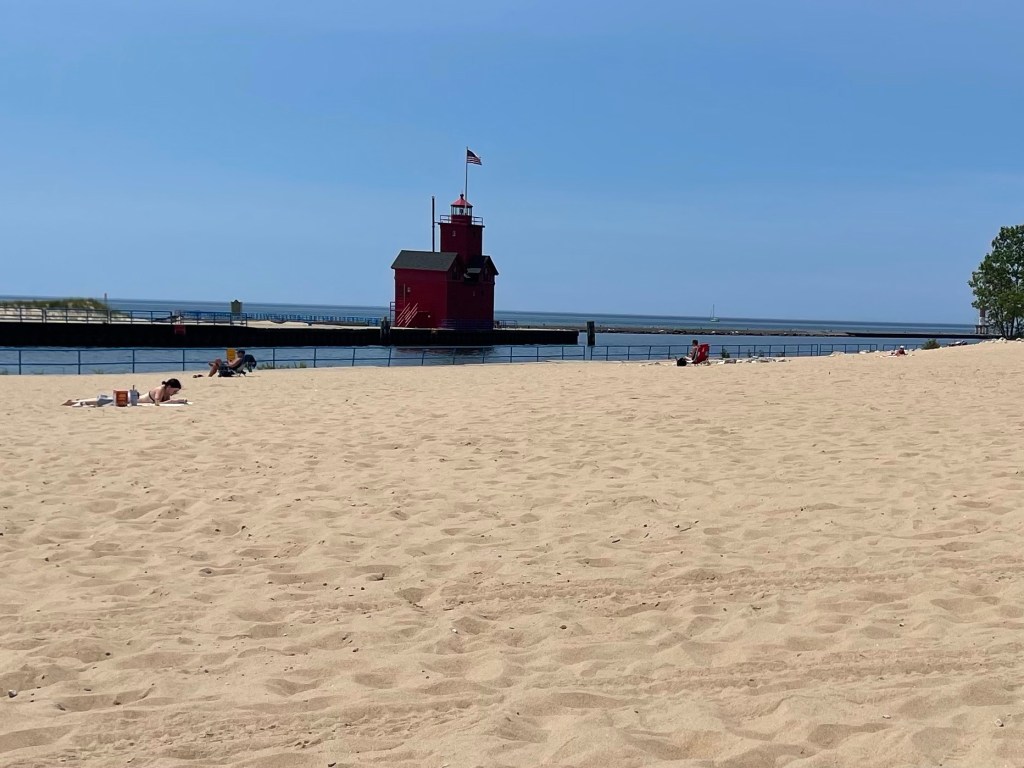
During our brief visit to Holland, we didn’t venture out much to see what it has to offer. Sadly, we arrived a couple of weeks after the tulip festival had ended and didn’t see anything else that piqued our interest. So, I took the morning to catch up on the blog, and later, we ventured out in search of a new loveseat for the camper but came up empty-handed. In the afternoon, we made our way to the picturesque beach, where we spent time relaxing in the sand and the sun. We watched the busy boat traffic coming and going through the cut between Holland Harbor and Lake Michigan and walked out on the Holland North Pierhead to get a closer look at the red lighthouse. That was it for our short visit. We departed the following morning.
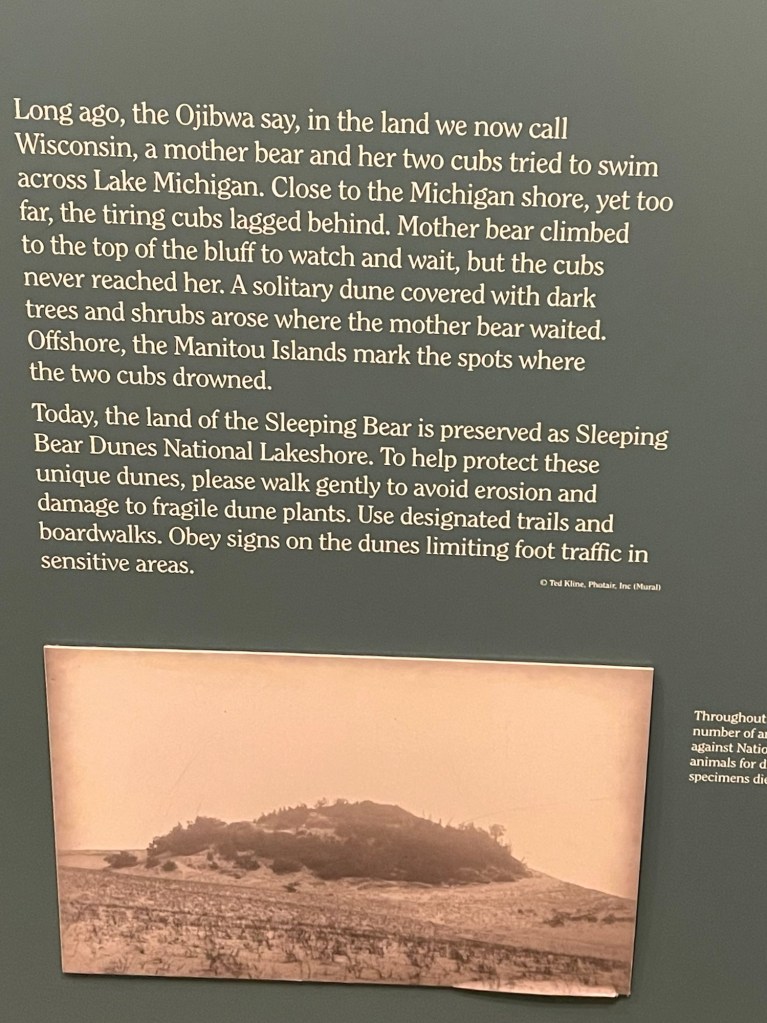
Tucked away in the northwest corner of Michigan’s Lower Peninsula is Sleeping Bear Dunes National Lakeshore. Named after a Native American legend about a mother bear and her two cubs, the dunes and the nearby Manitou Islands tell an enchanting story rooted in the area’s heritage. Established in 1970 and spanning approximately 71,199 acres while stretching 35 miles along the coast, the park is renowned for its outstanding natural features, including scalable dunes, forests, beaches, and ancient glacial formations. In August of 2011, after receiving thousands of online votes, Sleeping Bear Dunes National Lakeshore won Good Morning America’s title as the “Most Beautiful Place in America”. When Grammi and I arrived at this most beautiful place, we knew we were not in Indiana any longer.
We set up camp at Platte River Campground. We had no hookups—no water, no electric, and no sewer dump. To make our stay even more pleasant (ha-ha), the campground rules prohibit the use of our generator. We knew, however, this would not be a problem for a stay of only three nights, especially since the nights were cool and the days were mild.
Our adventure at Sleeping Bear Dunes National Lakeshore began with a scenic drive through the park, covering all 35 miles from one end to the other. This initial journey was all about getting our bearings and soaking in the natural beauty. We made stops along the way, stopping first at Platte River Point Beach where the Platte River meets Lake Michigan.

Platte River Point Beach is truly a pretty place. The confluence of the river and Lake Michigan creates a scenic spot that seemed perfect for a leisurely walk along the riverbank. Boy, were we wrong! The experience started out very enjoyable, as we were entranced by the charming landscape. The weather was nice, good enough for me to wear shorts and sandals. However, our peaceful stroll quickly turned into an ordeal. I felt a sharp biting pain on my legs and looked down to find them covered with hundreds of biting black flies. It was like a scene from a horror movie—every inch of my legs was covered with these biting insects.
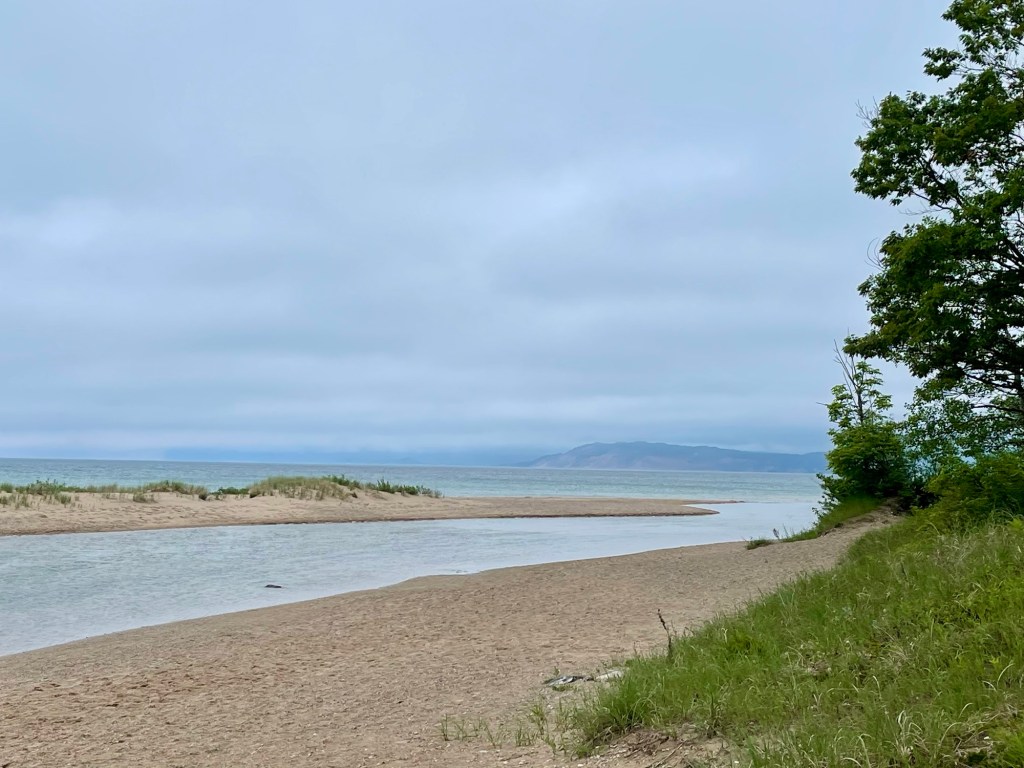
Platte River Spills Into Lake Michigan
I began swatting at the flies, but I couldn’t rid myself of them. It seemed the more I swatted, the more aggressive they became. I couldn’t get out of there fast enough. They followed us all the way to the truck, and as soon as we opened the door, they swarmed inside. The next few minutes were a chaotic blur as we tried to shoo the flies out of the truck. It was a mess, to say the least, and certainly not the kind of start we had hoped for on our adventure.
While still battling a few pesky flies, we drove to the visitor center with all the windows down. We shared our unpleasant insect experience with a ranger, who informed us that it was black fly season and they had been receiving reports all morning. He mentioned that some spots, like Platte River Beach, were particularly bad. No kidding. He also said they had to close one of their exhibits in Glen Haven due to the fly invasion. Normally, we talk to a ranger at the visitor center as soon as we arrive at a national park. This time, we didn’t because of its location midway in the park—it was a mistake not to get the most up-to-date information about the park first.
We also learned from the park ranger that Pierce Stocking Scenic Drive was closed, which was a real bummer! We had been looking forward to this highlight of the park. As luck would have it, they were repaving the road during our visit.
Nonetheless, armed with some recommendations from the park ranger, we drove through Glen Haven Historic District to our next stop at Sleeping Bear Point Coast Guard Station Maritime Museum. This fascinating place taught us about the history of the U.S. Life-Saving Service, the predecessor to the modern U.S. Coast Guard. The Manitou Passage off of Sleeping Bear Point was known as a place where ships would run aground, so in 1901, the Sleeping Bear Point U.S. Life-Saving Station was built. It housed crews known as “surfmen” who would stand ready to perform daring rescues in dangerous conditions. The museum, dedicated to preserving the maritime history of the Great Lakes and the brave men who worked there, is located in this historic building.
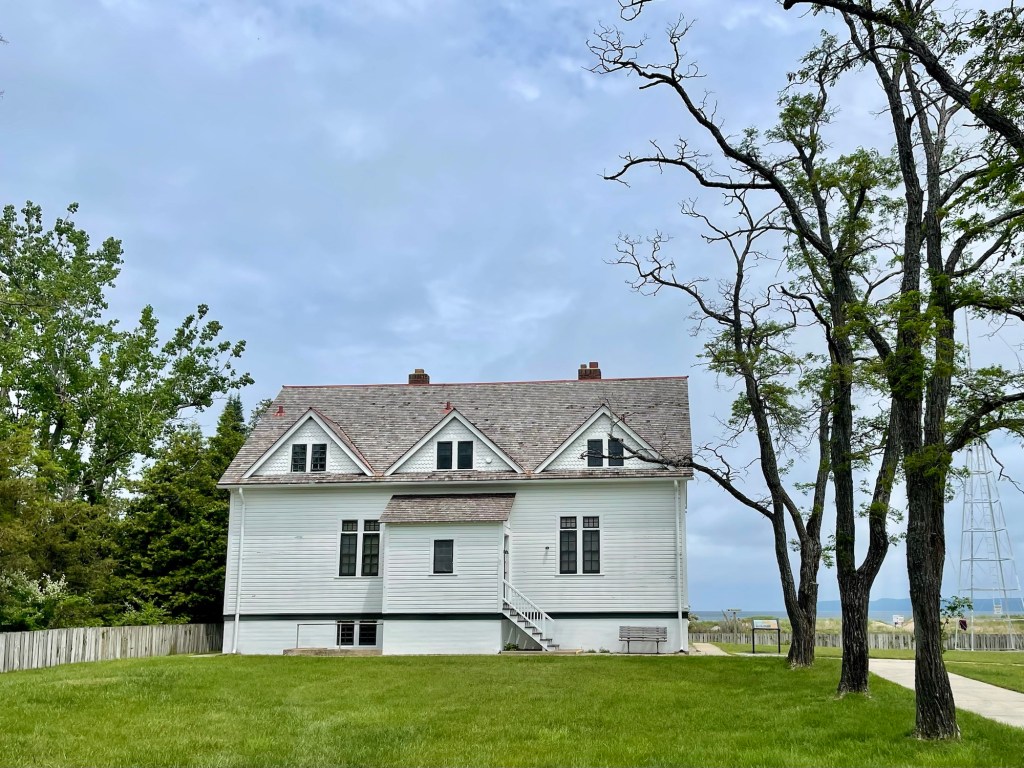
The tour also included a visit to a boathouse where knowledgeable park volunteers explained the history and use of the surfboats and equipment on display. Two surfboats equipped for rescue—one on a rail and the other on a cart, were ready to be deployed at a moment’s notice. The surfmen would open the rear doors of the boathouse, roll the surfboats down to the water, and launch them into action. A variety of rescue equipment was displayed around the boathouse, making the visit even more interesting.

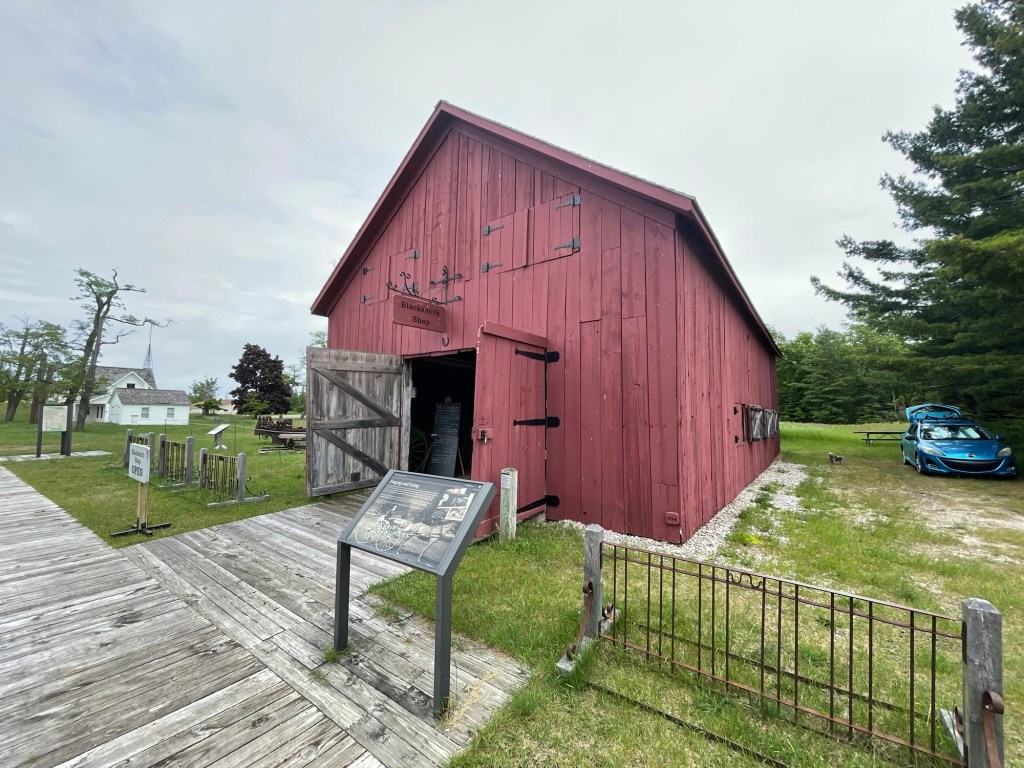
After leaving the museum, we returned to Glen Haven Historic Village, a restored port village now part of Sleeping Bear Dunes National Lakeshore. The village has historic attractions such as a general store, blacksmith shop, and a cannery and boat museum. It was the Glen Haven Cannery and Boat Museum that was shut down for the day due to the black flies. However, we did stop at the blacksmith shop for a live demonstration. A self-taught blacksmith, a woman, was aggressively striking red-hot iron with a big hammer, explaining her actions as she worked. The shop displayed small items such as hooks, nails, and ornaments that were available to take for a donation. Grammi took home an iron hook that mounts to the wall.
We stopped for lunch in Glen Arbor, another quaint village on M-109 featuring a small shopping district and some restaurants. Afterward, we continued driving northward, enjoying the lush scenery. We pulled off on a side road, passing old barns and farmsteads around Port Oneida Rural Historic District, a settlement first established in 1852. Near the northern boundary of the park, we found a road leading us to an area for beach access. Should we try this again? Grammi loves to walk the beach and was yearning to dip her toes in the waters of Lake Michigan. There was a strong breeze. Maybe that would keep the flies away. “Let’s give it a try,” I said. We didn’t make it to the edge of the parking area before we were swarmed once again by those pesky flies. Well, at least we can’t say we didn’t try.
After traveling all thirty-five miles inside the park, we turned back toward the campground where we were drawn to stop at the Dune Climb. Apparently, the Dune Climb is a must-do activity for anyone coming to this park. The sight of the dune seemingly screams to be climbed. Dozens of people were scaling the massive sand hill when we arrived.
As we approached the sand dune, the sheer size and beauty of it were awe-inspiring. Looking up from the base, it appeared daunting, but the challenge was invigorating. The first steps were easy, with the soft sand cushioning our feet. As we ascended, the incline became steeper, requiring more effort to propel ourselves upward. With each step, our feet sank deep into the sand, allowing only small gains for the effort. Through determination and perseverance, we reached the top of the first dune. It was a triumphant moment, as a sense of accomplishment engulfed us. The breathtaking view made all the effort worthwhile.
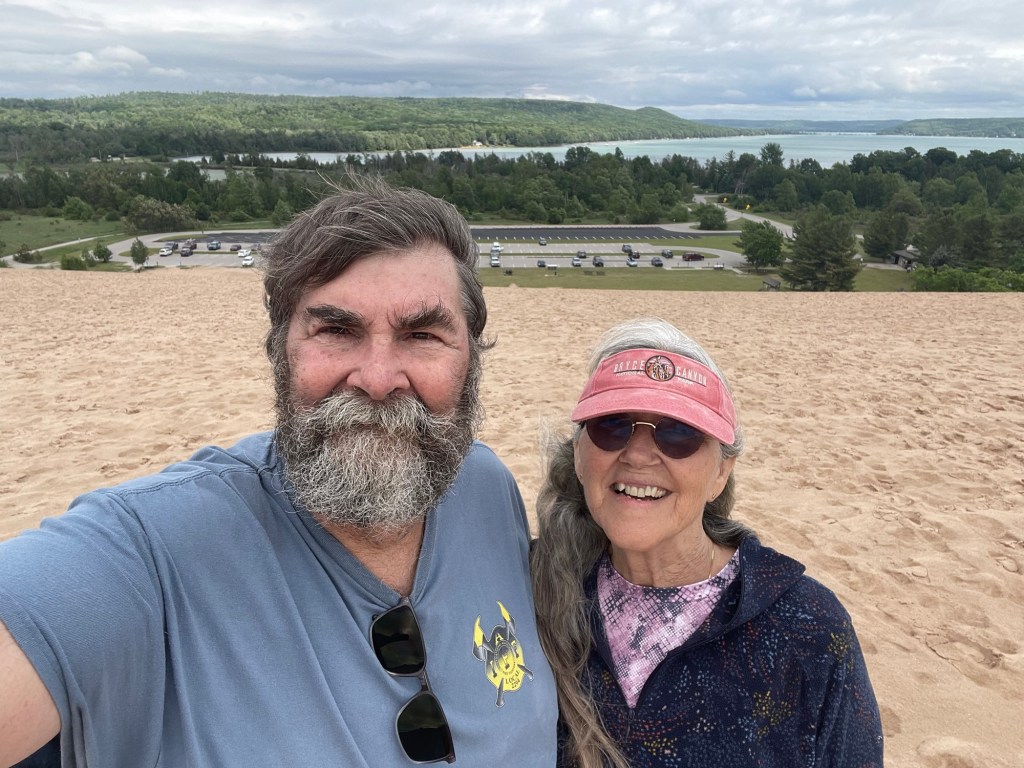
The climb didn’t end here; more dunes lay ahead. The adventurous climber could continue for another two miles or so over the rolling dunes toward Lake Michigan. For us, it was time to descend, which was much easier by contrast. Many of the younger folks joyfully ran and slid down, but Grammi and I saved our bones and resisted the temptation.
The next morning, we took a day trip to Leland, often referred to as “Fishtown.” It is a charming village rich in history and cultural significance. Founded in the mid-19th century, Leland has retained much of its historic character. Fishtown, a section of Leland along the Leland River, preserves this fishing settlement’s heritage with its weathered shanties, smokehouses, and fishing docks. These structures, some over a century old, offer a glimpse into the past, where commercial fishing was the lifeblood of the community. Today, these historic buildings house boutiques, galleries, and eateries, blending old-world charm with modern attractions.
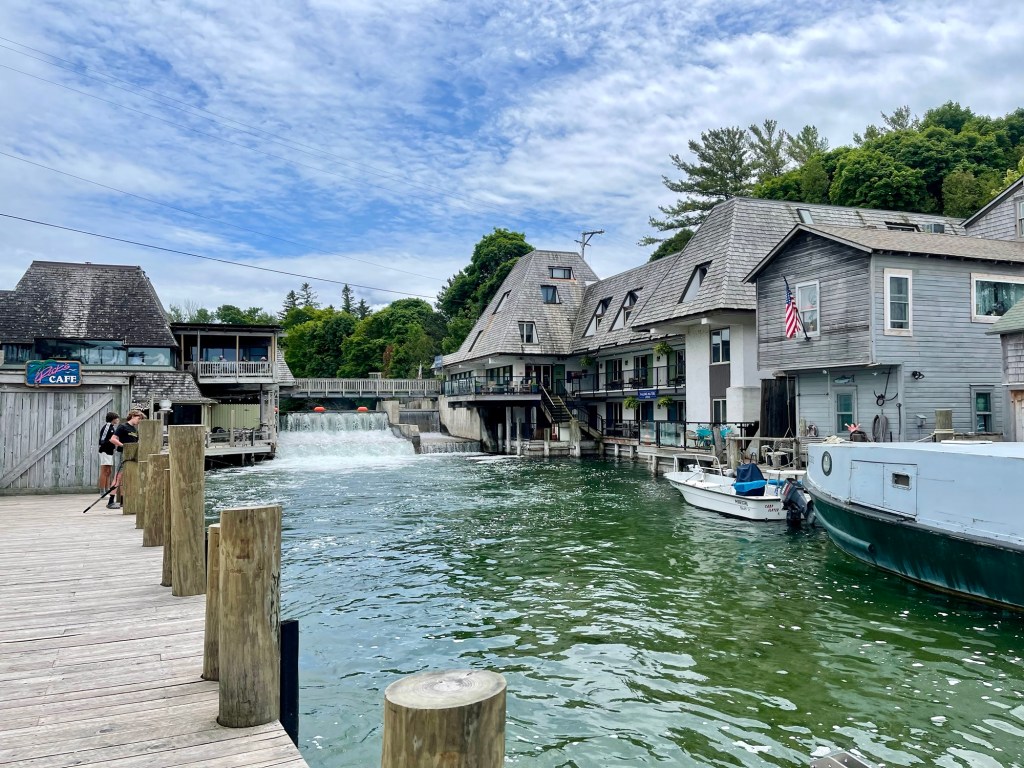
Carlson’s Fishery is a cornerstone of Fishtown and a testament to the region’s rich maritime heritage. This fifth-generation family-owned business has been serving the area since 1904, making it one of the oldest continuously operated commercial fisheries in the state.
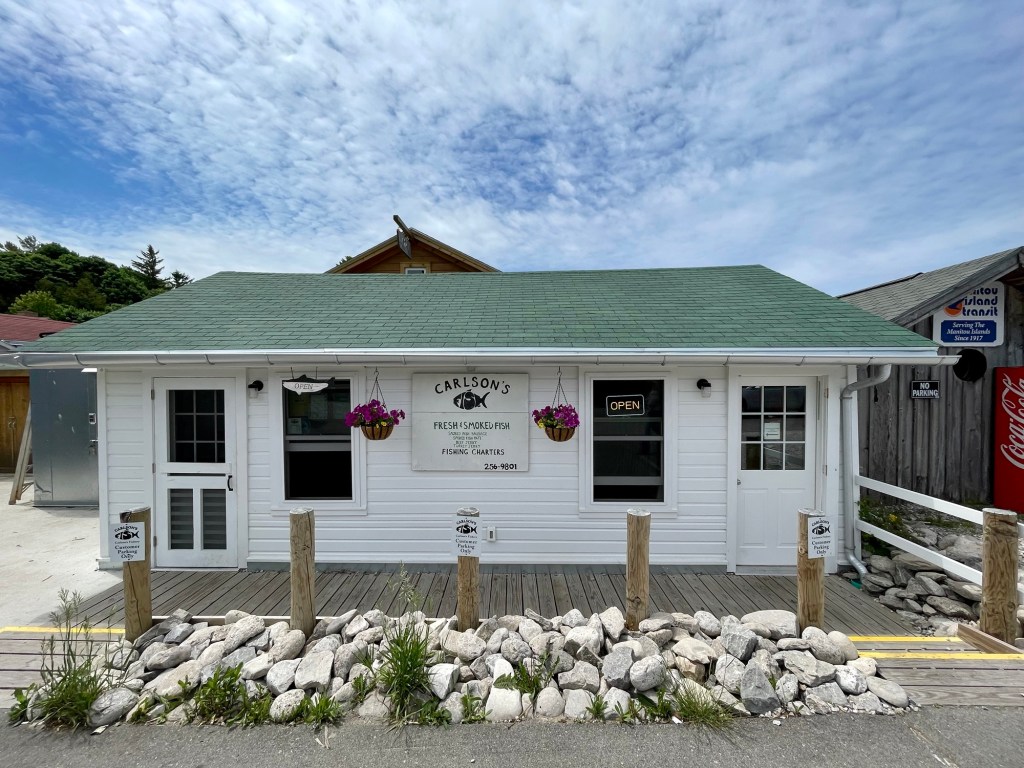
The aroma from the iconic smokehouse wafts through the air, enticing those passing by to step inside and sample the smoked fish dip or maybe try a filet of the day’s catch. The selection typically includes whitefish, trout, and salmon, all freshly caught from the pristine waters of Lake Michigan.
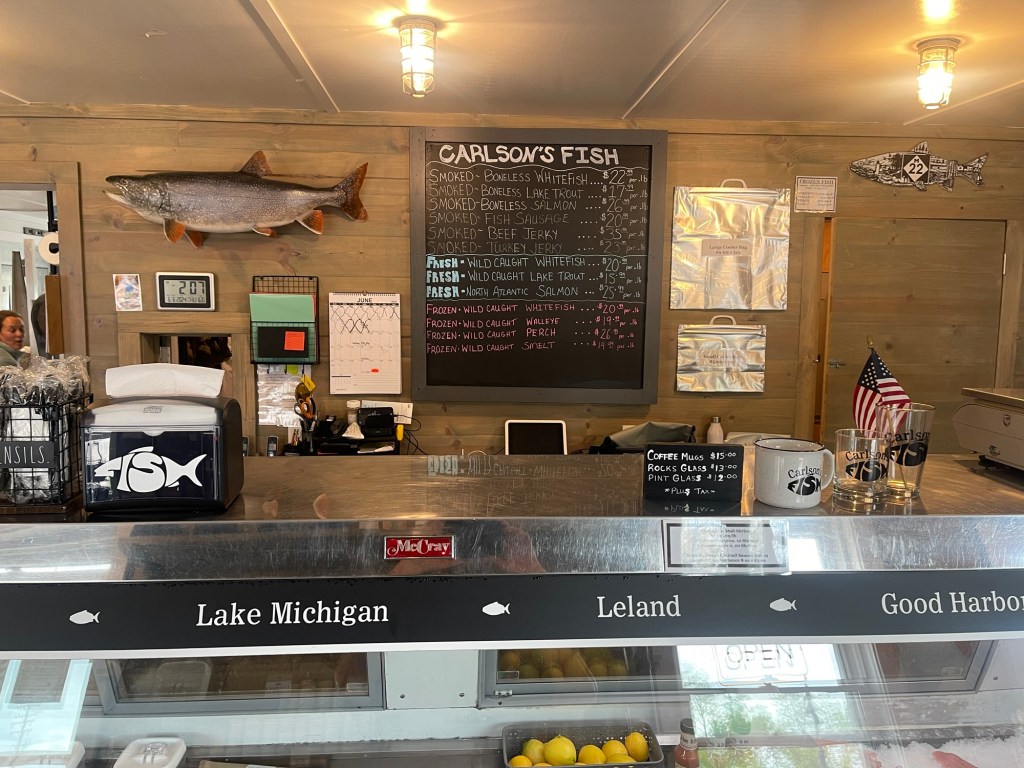
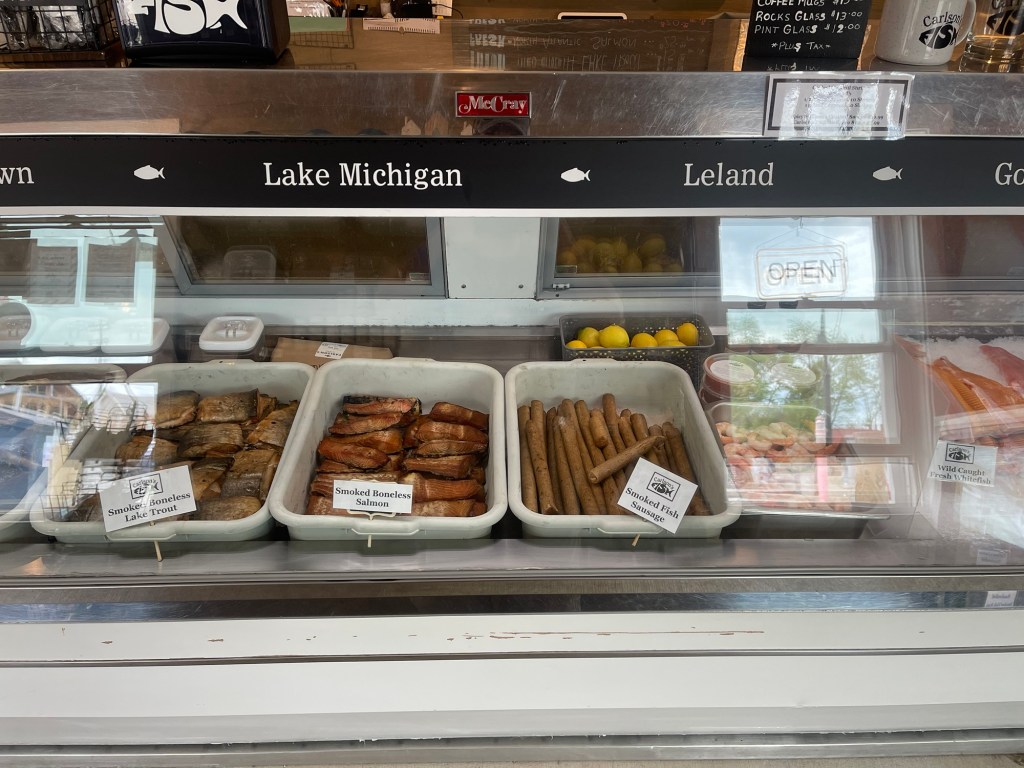
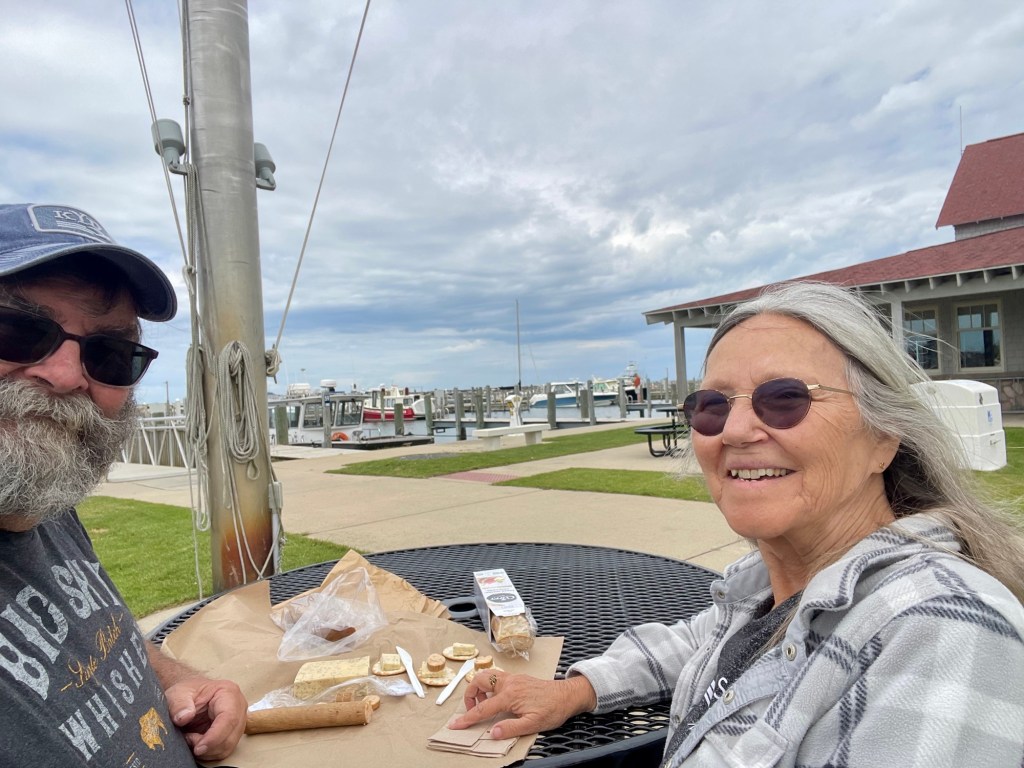
I wanted to try their smoked fish sausage. Sound strange? It did to me. It’s something I’d recently heard about. I’m usually up for trying something different and was assured by a local that I would not be disappointed. With a half-pound of the sausage wrapped in brown butcher’s paper, we went to the Village Cheese Shanty to get some cheese and crackers. We found a table and made a lunch of fish sausage and cheese on a cracker. Grammi surprisingly said it was one of the best lunches we’ve had in a while. Our adventure continued with a delightful stroll through charming shops, even grabbing an ice cream cone. It was a fun time and well worth the trip.
But our day wasn’t over yet. We continued northward to the tip of the Leelanau Peninsula, where we toured the historic Grand Traverse Lighthouse located within Leelanau State Park. First constructed in 1852, this lighthouse served as an active navigational aid on Lake Michigan until 1972. What makes it unique is the square tower attached to the keeper’s house, setting it apart from the typical round lighthouse towers built during that era. Set against a picturesque shoreline, the black lantern room standing above the white house with its red roof and windows trimmed with green is a stunning sight.
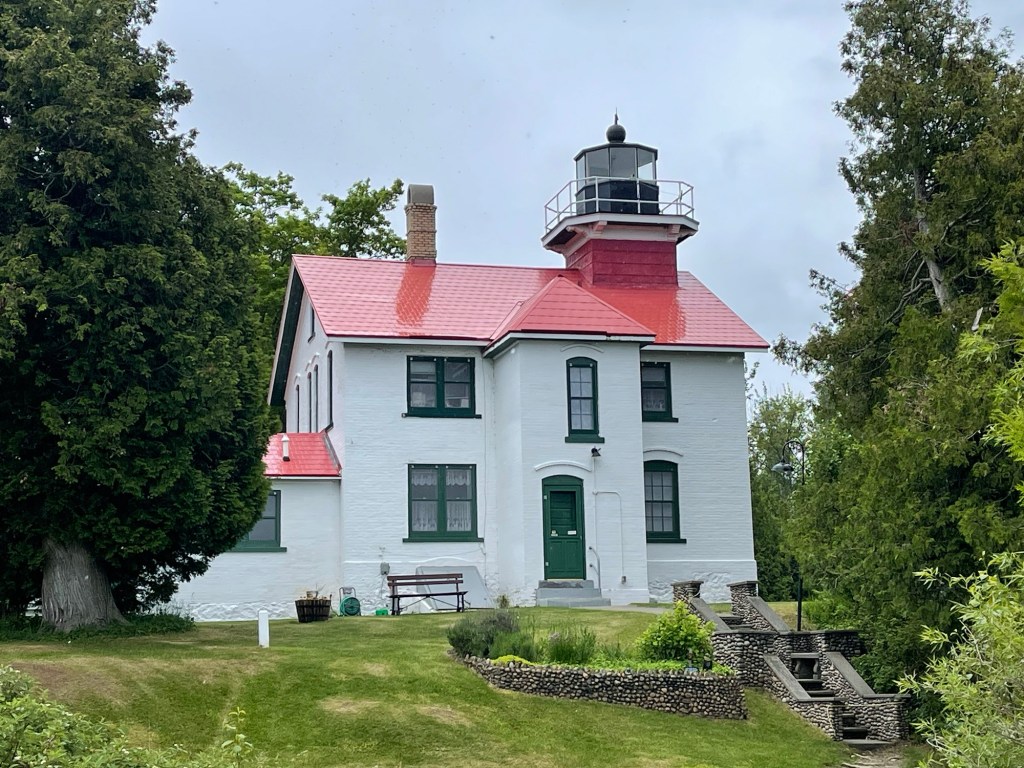
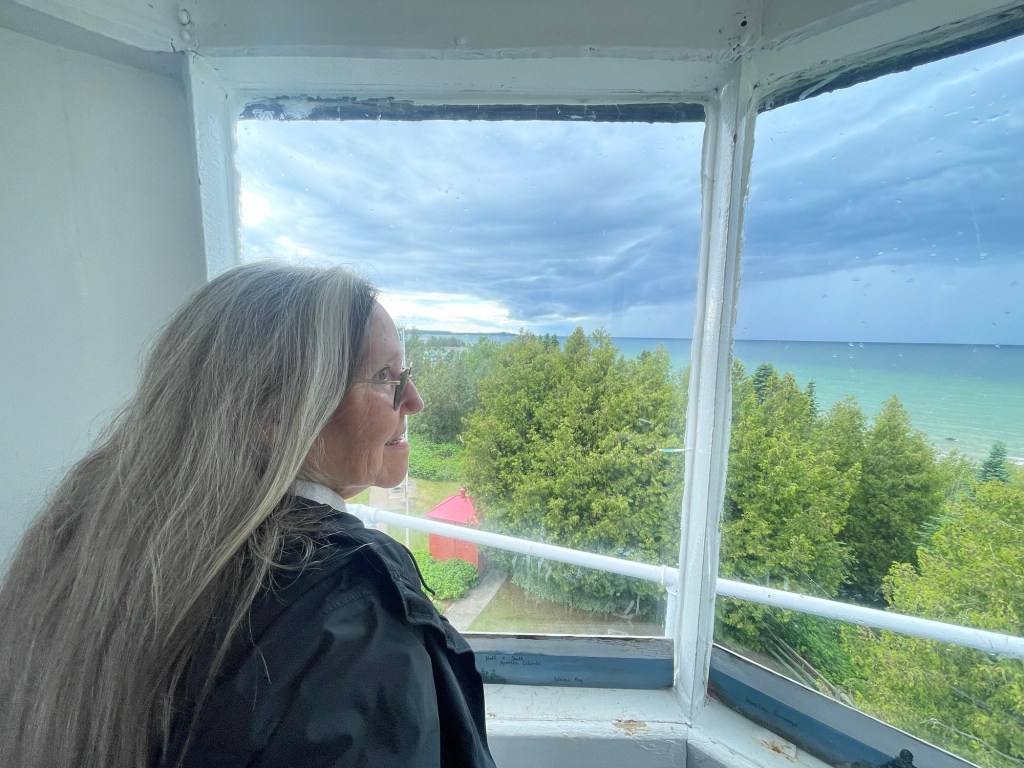
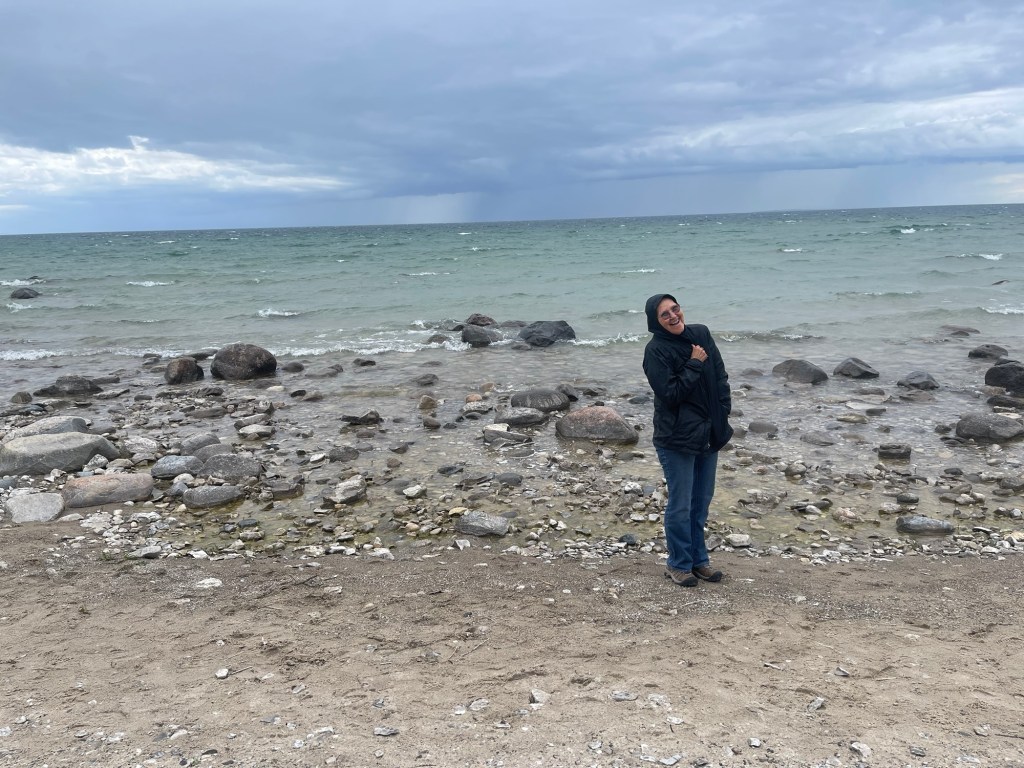
We toured the lighthouse. The living quarters is a museum of artifacts showcasing the lives of those that lived there. We climbed up the stairs and admired the view from the lantern room. We walked down to the beach. There were no flies there, maybe because it was too cold for them. Despite the cold, Grammi was happy to finally get on the beach to look for colorful rocks.

Our journey to Sleeping Bear Dunes National Lakeshore and the nearby area was nothing short of magical. We left with unforgettable memories and a deep appreciation for the natural wonders of Michigan’s west coast. But this is just the beginning of our time in this state. It took us a long time to finally get here, and we’re not done yet.
Until next time, happy days and safe travels.
 The Adventures of Grammi and Grampa
Have you ever heard of the Apostles Islands? They’re at the top of Wisconsin. This September I’m going there. The images I’ve seen of the cliffs ect. are gorgeous. I’m just putting a possible destination for you two in your heads.
LikeLiked by 1 person
Yes, we stopped for a couple of days in Bayfield—a bustling tourist town. We took the Apostles Island Grand Tour boat ride. It was interesting, but nothing so dramatic as Pictured Rock.
LikeLike
Wow. I know Pictured Rocks are beautiful, but on-line they make the Apostles Islands look like a paradise. Thank you. I’ll keep more real expectations now for the Islands.
LikeLike
I love it here in Michigan. I’m hoping you’re going to spend time in the U.P. (north of the Mackinac Bridge.) The Lake Superior shoreline is the best. On my blog I have some posts about the U.P. Click on the menu and click on “Adventures” to find my posts of places I’ve been to in the U.P. Have fun! https://michiganmary.com/2020/10/27/a-2020-view-of-michigans-upper-peninsula/ https://michiganmary.com/2020/06/17/i-want-to-live-in-a-mushroom-house/ https://michiganmary.com/2018/12/28/i-found-it-the-nonesuch-shale/ The porcupine mountains/ nonesuch-shale is a must. Lots of stairs but worth it. https://michiganmary.com/2018/05/26/my-vacation-adventures-may-2018/ (The Mushroom Houses are in the mitten, not the U.P.) The rest are in the U.P. Sugarloaf Mountain, Greenwood Reservoire, Pictured Rocks, Porcupine Mountains, Lakenenland sculptures, Brockway Mountain Scenic Drive, Presque Isle Park. Enjoy Michigan! Oh! Also Tahquamenon Falls. In menu, click on waterfalls to find my 49 waterfalls. 48 of them are in the U.P. Have a great time!
LikeLiked by 1 person
Yes, we are in the U.P. now, Copper Harbor to be precise. We just got back this afternoon from Isle Royals. We’ve seem much of what you suggest, but not all. What we have seen will be the subject of my upcoming blogs. Thank you.
LikeLike
Awesome. Have fun!
LikeLike
Michigan is a beautiful state. I enjoyed reading your post. I’ve visited a number of these places, but not all. We rode our e-bikes on the trails around Holland, but it was a “once and done” for me. Many of the trails parallel busy roads. I look forward to reading more about Michigan!
LikeLiked by 1 person
Thank you Betty. We will be in Michigan for a few weeks, traveling here and there. So far, I like what I see.
LikeLiked by 1 person