
With our kids now off on their own adventures, Grammi and I are ready to embrace the open road. While towing our camper to a new campground, I focused on the highway in front of me, and a familiar tune popped into my head. It was one of those songs that stubbornly kept playing over and over, refusing to leave. 🎶 Just the two of us, we can make it if we try, just the two of us, you and I 🎶. It got me reminiscing about our past adventures and wondering what lies ahead for “the two of us.”
Friends and fellow travelers often ask how Grammi and I manage to thrive on the road. How do we get along in such close quarters? Where do we escape to if we need a bit of space from each other? The truth is—we get along remarkably well. Anyone who travels full-time, or in our case, part-time, will tell you that you really have to like the person you are with to be successful. I usually respond to these kinds of questions by saying that Grammi is just lucky that I am so easy to get along with, to which she typically rolls her eyes, turns her head, and mutters something under her breath. No doubt, she’s expressing how much she likes me.
Our new destination is a county park located south of the Ohio River near Hawesville, Kentucky. The Vastwood County Park Campground, perched on a hillside above a man-made lake, was a delightful discovery. Our waterfront site included a gravel pad, water, and a 30-amp electric hookup. Arriving midweek meant we almost had the 21-site campground to ourselves, except for a couple of other campers up the hill, well out of earshot. It was blissfully quiet—just what we needed to unwind for a few days.

This campground was a bit of a detour, but for a very special reason. Grammi recently discovered some fascinating family history. Her great-great grandfather’s log cabin had been relocated to Shubael Little Pioneer Village in Cannelton, Indiana, where it was meticulously restored. Back in the mid-nineteenth century, Homer Hull Carter raised thirteen children in that humble log cabin. This trip was a pilgrimage of sorts, connecting with a tangible piece of Grammi’s heritage and bringing the past just a little closer.
It all started a few weeks ago when Grammi did some online research on Shubael Little Pioneer Village. She found a phone number to call and discovered that the village is only open to the public during a festival held once a year in October. However, the website said that private and school tours can be arranged upon request.
Grammi reached out to Caroline Hammock, mentioning that she was a descendant of Homer Hull Carter and expressing her interest in visiting the cabin during our travels. Caroline responded warmly, saying, “Girl, you are related to half the people in this county! I’d be happy to arrange a tour for you.”
As they chatted, Grammi realized she was actually related to Caroline through the Hammock line. Caroline had married a Hammock, and Grammi’s great-grandfather had also married a Hammock—Cynthia Hammock, Grammi’s great-grandmother.
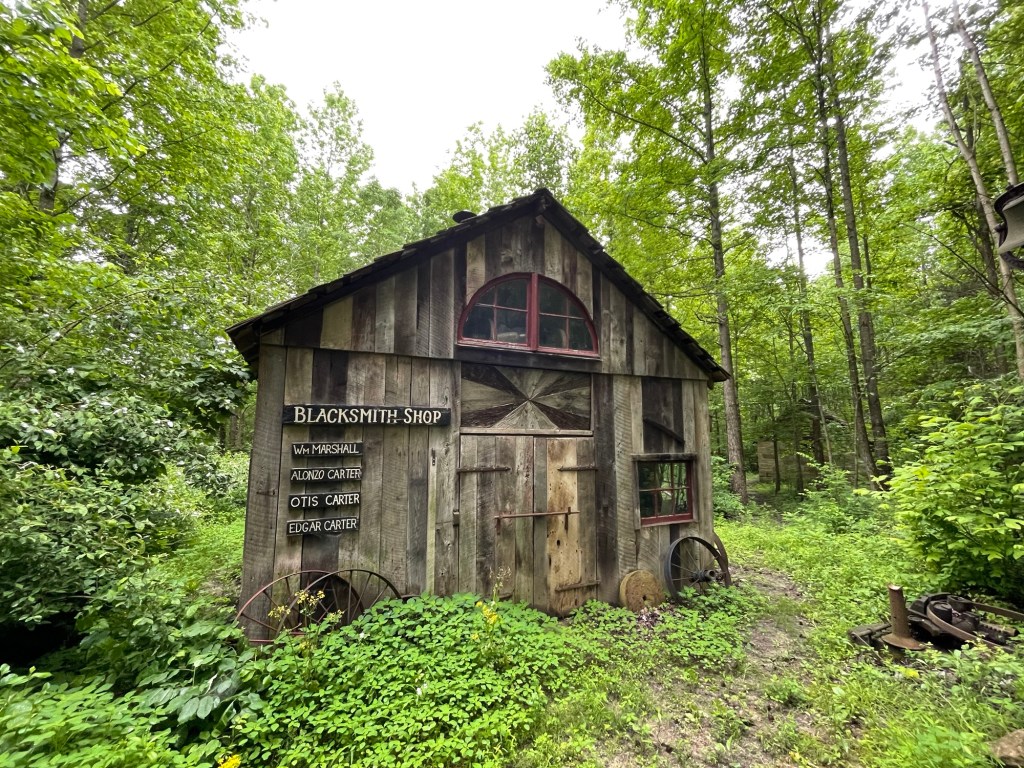
On the day of our scheduled visit, we were greeted by Ms. Caroline Hammock and Mr. Chuck Poehlein. Caroline, obviously proud of Shubael Little Pioneer Village, was eager to show us around. We could not visit the Carter Cabin without seeing all the other buildings that were relocated and restored. First was the Mercantile, stocked with all the things a pioneer family might need. Then came the old one-room schoolhouse built in 1905, followed by the smokehouse, carpenter’s shop, and the blacksmith shop.
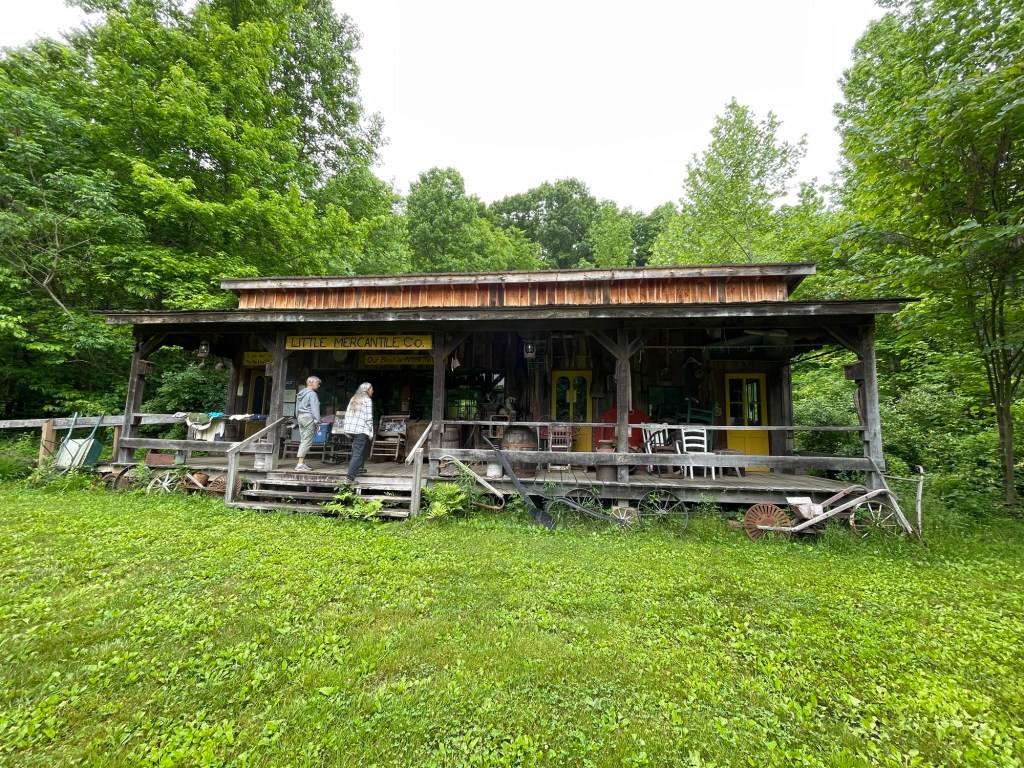


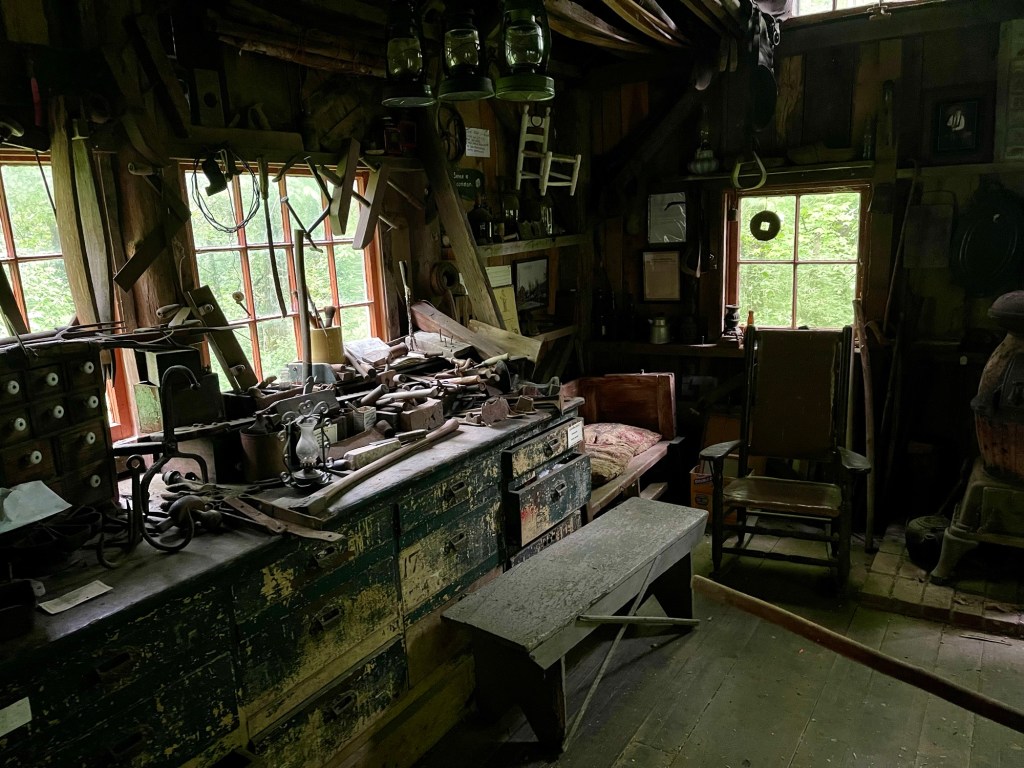
Sometime after the Civil War, Alonso Carter, the oldest son of Homer Hull and Weltha Carter, purchased the land where the blacksmith shop was located from William Marshall. It was subsequently passed down through three generations. It’s something else to think that a Carter worked in that blacksmith shop for all those years.
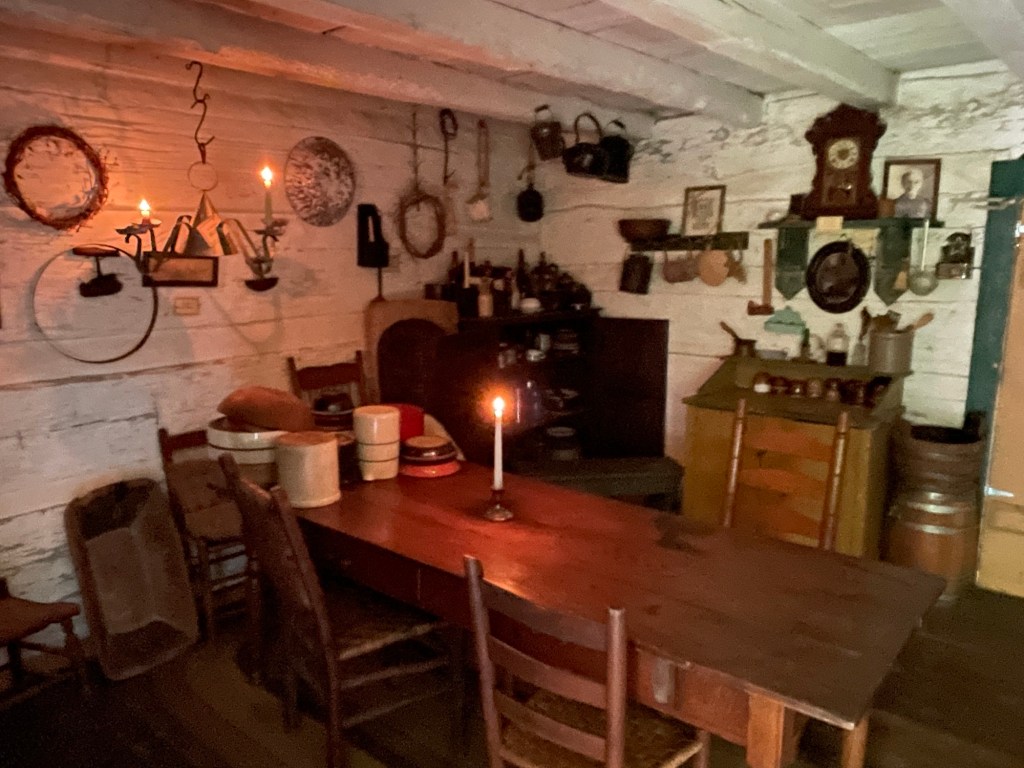
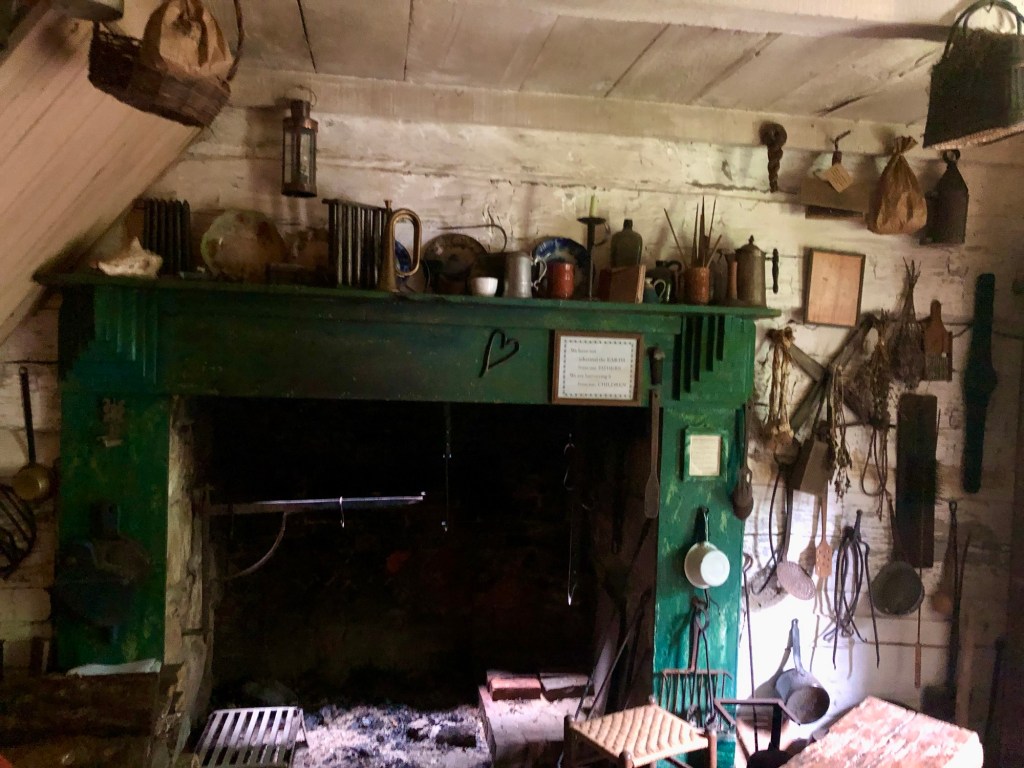
The Carter Cabin, constructed with hewed logs, has impressively endured for 150 years in its original location. After a skilled relocation and restoration process, it is now poised to last another 150 years. Our host, having made preparations for our visit, lit candles that cast a dim, flickering light illuminating the interior. Old photos of the cabin and family portraits adorned the walls. The fireplace, a central feature of the cabin, was rebuilt using the original hearthstones. Parts of the wood mantle survived, and it was used to reconstruct something close to the original. Period-appropriate artifacts furnished the interior, offering a glimpse into how it might have once appeared. The aged logs, showing signs of numerous layers of whitewash, were preserved to maintain their authentic appearance. Grammi climbed the steep, narrow stairs to the loft and, looking around at the furnishings, wondered how it was possible to raise 13 children in such a small space.




Our second host, Chuck Poehlein, was a quiet gentleman, likely present to offer support and ensure Ms. Hammock’s safety. As we walked back to the Mercantile, we learned that Mr. Poehlein was a key figure in the creation of Shubael Little Pioneer Village. It was his experience as a museum curator that initiated the efforts to preserve the pioneer life that led to the creation of the village. And, it was his generous donation of forty acres of his family land for the village.
Grammi and I left the Shubael Little Pioneer Village with a new appreciation for preserving old structures. We have seen many refurbished buildings in our travels, from Franklin D. Roosevelt’s Little White House and Ulysses Grant’s home to Jefferson Davis’s home and the churches in Cades Cove. The list goes on and on. However, it kind of hits a special spot when the preserved home is one from family. The Carter Cabin is a remarkable symbol of family life from a bygone era and Grammi stands proud knowing it comes from her own lineage.
With the visit to Shubael Little Pioneer Village behind us, we set our sight on what else was in the area to see. There was the Celtic Cross of Blue Heron Vineyard and Winery, carved from a single stone. There was Abraham Lincoln’s boyhood home where we saw the old Lincoln homestead. There was Santa Claus, Indiana, famous for the Christmas-themed attractions. This was a place I remember visiting long ago. And finally, there was the Deer Creek Baptist Church where we found the graves of Grammi’s great-grandfather and great-grandmother alongside four of their children.
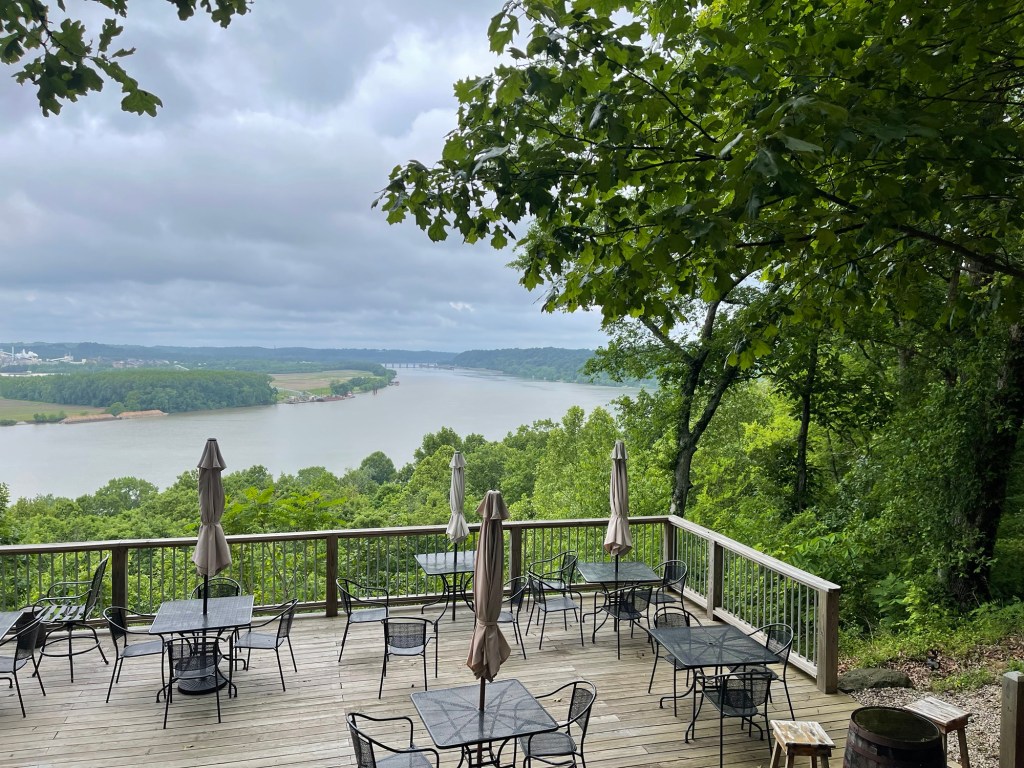

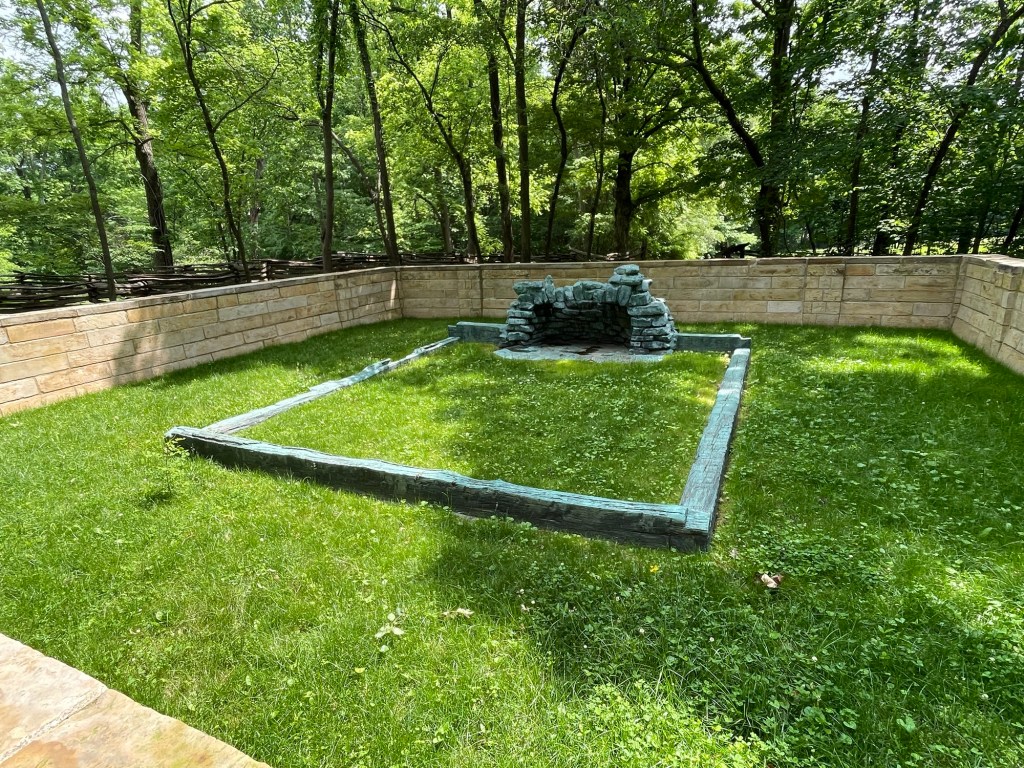

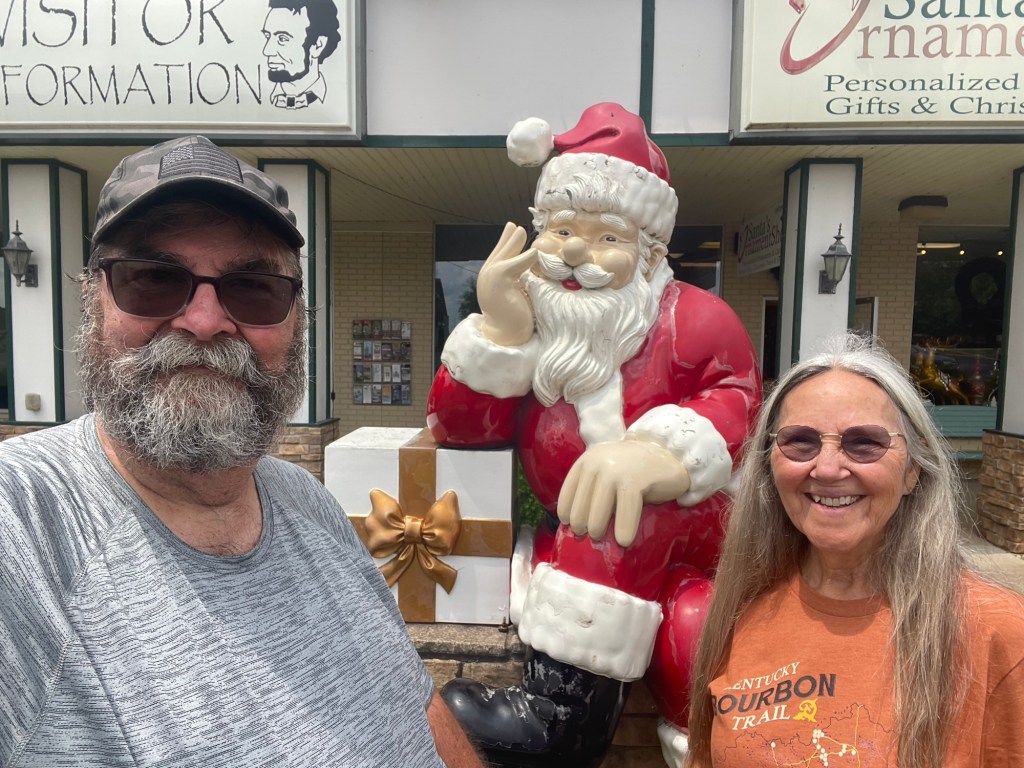

Overall, it was a successful three days. Grammi is happy to have connected with some family history. I am happy to revisit a place remembered from my preschool days. And we are both happy to be experiencing this together.
Until next time, happy days and safe travels.
 The Adventures of Grammi and Grampa
How cool to be able to see and touch parts of your family’s past!
LikeLiked by 1 person