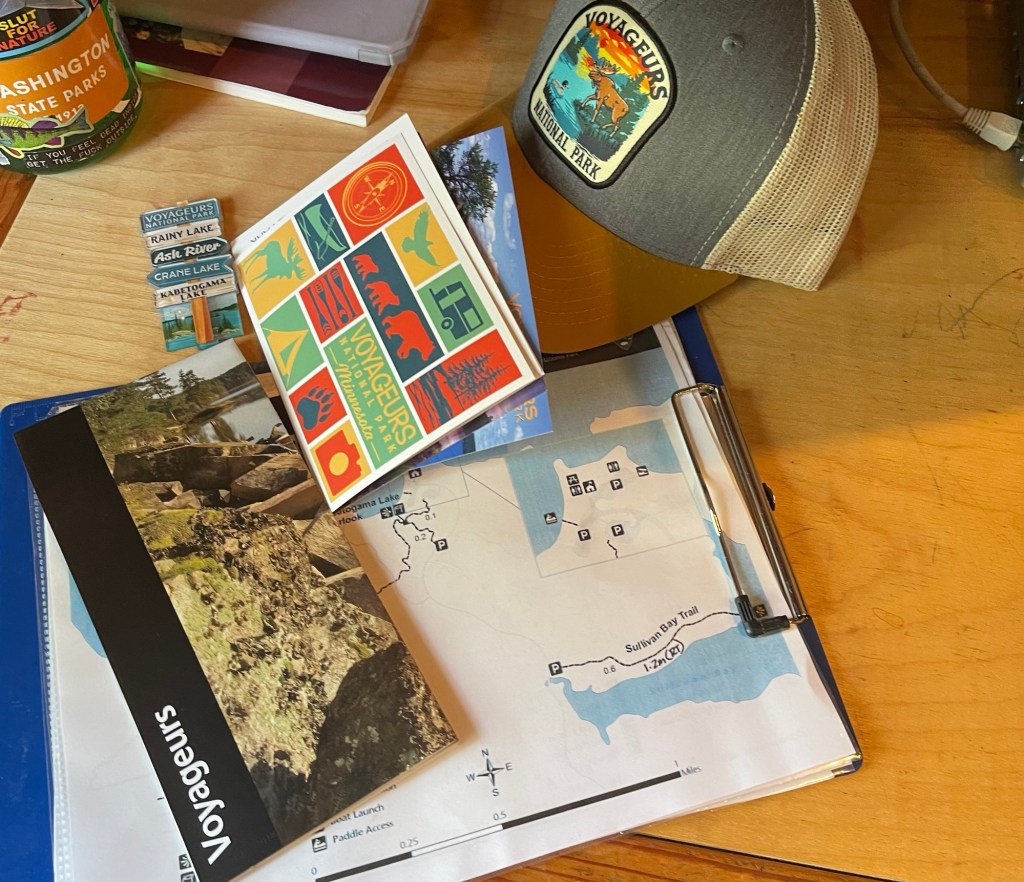
Whenever we plan a trip to a new destination, we often form a mental picture of what we expect to find. Yet, despite our detailed research and meticulous planning, we never seem to get it quite right. This can be either a good thing or a bad thing. Our travels are often a mixed bag of highs and lows, and our recent visit to Voyageurs National Park was no exception, delivering a blend of adventure and unforeseen challenges.
Voyageurs National Park, established in 1975, takes its name from the French word “voyageur,” meaning traveler. The park commemorates the French-Canadian fur traders who, in the 18th and 19th centuries, frequently navigated the area, transporting furs and other goods by canoe and small boat to cities in the East.

Voyageurs National Park, the thirty-eighth we’ve visited, is a water-based park in northern Minnesota, centered on the waterways that separate the United States from Canada. Renowned for its forests, lakes, rivers, and pristine islands, it’s a haven for fishing, boating, kayaking, canoeing, and primitive camping on islands accessible only by boat—or in winter, by snowmobile or cross-country skiing over frozen lakes. With so many opportunities for outdoor adventures, we were eager to experience all the park had to offer.
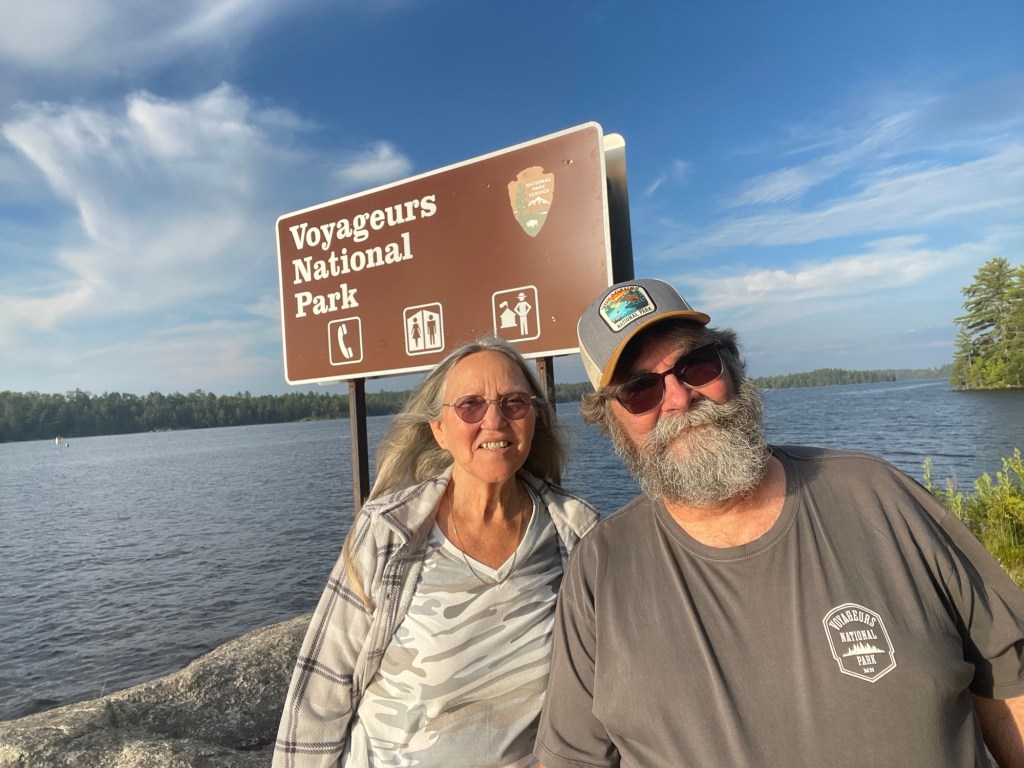
Unfortunately, the weather didn’t cooperate, with an unusual amount of rain over the past few weeks. The lakes were swollen and overflowing their banks. The ground was soggy and muddy, making hiking difficult at best. The on-again, off-again rain persisted during our stay, creating an uncomfortable, muggy environment. The stubborn cloud cover dashed any hope of seeing the Northern Lights, and Voyageurs’ renowned dark skies revealed little of the nighttime stars.
To make matters worse, the mosquitoes were relentless. They were enormous, nearly the size of small birds, and swarmed in flocks, appearing as thick, dark clouds. We were warned about them; the locals even joked that the mosquito is the state bird. But nothing could have prepared us for the reality. It felt like a scene from a Hitchcock movie as we ran for our lives, frantically swatting at the bloodthirsty monsters. Even with repellent, the bites kept coming.
We set up camp at Ashe Rivera Resort. Once again, the term “Resort” was misleading. If you’ve been following the blog, you know my thoughts on such labels. This was certainly no resort by any standard. We were parked in an overgrown grass site with deep tire ruts filled with water. The ground squished when I walked on it, and I twisted my knee in a pothole while unhitching the camper. I was also attacked by thousands of those ferocious mosquitoes.
While I don’t blame the park management for the mosquitoes or soggy ground and understand the difficulty of mowing in these conditions, it still made for a miserable stay. We felt that we could not go outside. I guess it is what it is.
After three nights at Ashe Rivera Resort, we relocated to another campground, The Pines of Kabetogama Resort. Now, this was a different experience. I didn’t mind that they called this a Resort. This well-manicured campground, located right on Lake Kabetogama, has amenities like a camp store, fishing pier, boat docks, boat rentals, and a swimming area. The staff was friendly and helpful. Even the mosquitoes were friendlier and less vicious. We stayed three more nights there while continuing to explore Voyageurs National Park and the surrounding area.

The Pines of Lake Kabetogams
Overall, we spent six days in the area, two of them confined the entire day to the camper as the rain poured outside. Though we didn’t experience everything we had hoped for, we persevered through the conditions and explored what we could. We were there, uncertain if we’d ever return. The challenging circumstances may have slowed us down, but they didn’t stop us. The vast network of interconnected waterways offered a unique experience, and despite the waterlogged landscape, the natural beauty still shone through, inviting us to see more.
Below is a short list of some of our activities—the good, the bad, and the ugly. It is not an all-inclusive list of everything we did, but it will provide a sense of our time in the area.
Ash River Visitor Center – Located in the historic Meadwood Lodge, this rustic log cabin features a fireplace where guests once warmed themselves from the cold and a back patio to sit amid the sights and sounds of nature during warmer weather. Today, the old lodge serves as a hub for park information, as well as a gift shop, nature displays, and ticket sales for boat tours.

Life on the Lake Tour – Aboard the Ne-zho-dain tour boat, we embarked from Ash River Visitor Center for a 2½ hour tour into Namakan Lake. The narrator described how people lived and worked in the area before it became a national park. There are other tours available that focus on a variety of different subjects, but this was the Life on the Lake Tour. We planned this excursion as one of two on our itinerary for getting on the lakes.

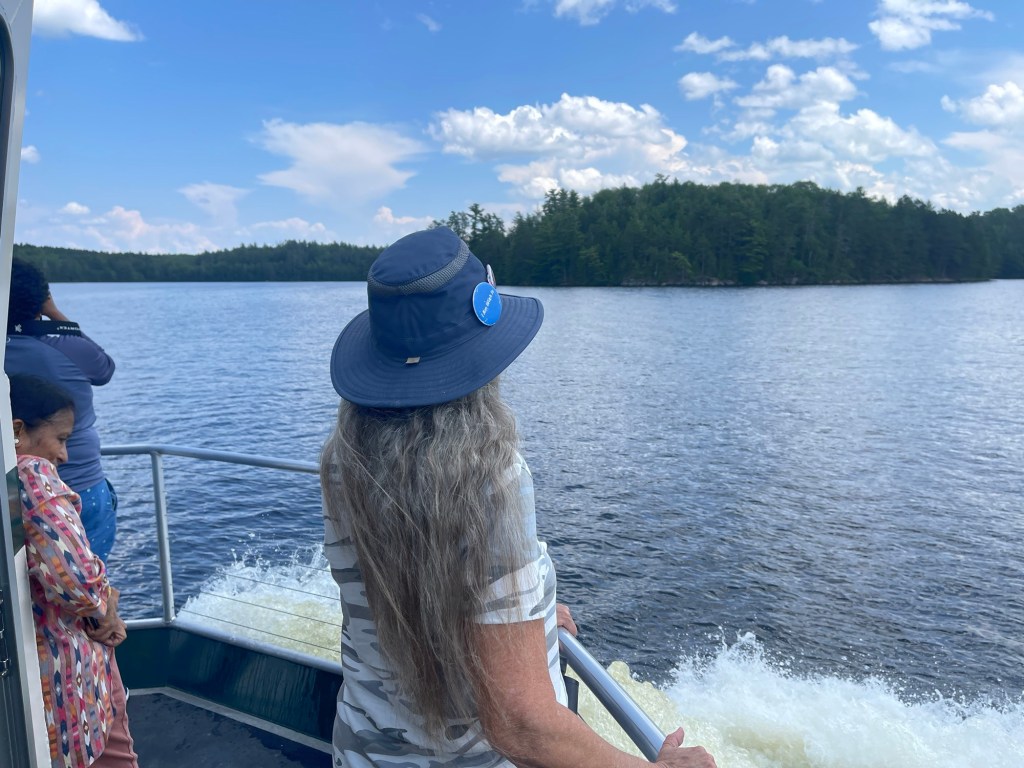
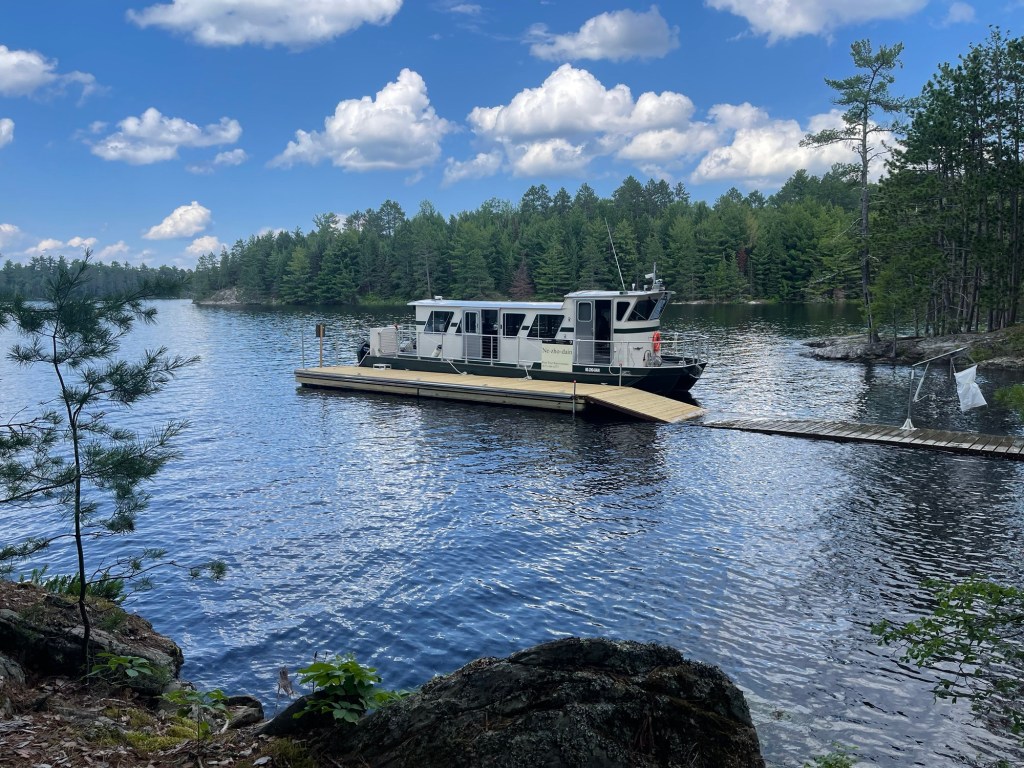
As we passed the rugged shores of the islands, we saw many secluded campsites maintained by the National Park Service. Some, according to the tour guide, are old homesteads abandoned after the national park took over. We saw bald eagles perched in a tree, scanning the waters for prey. Close by was their nest, about the size of a small car. We also saw a fair amount of boat traffic, ranging from speeding fishing boats to leisurely pontoons.

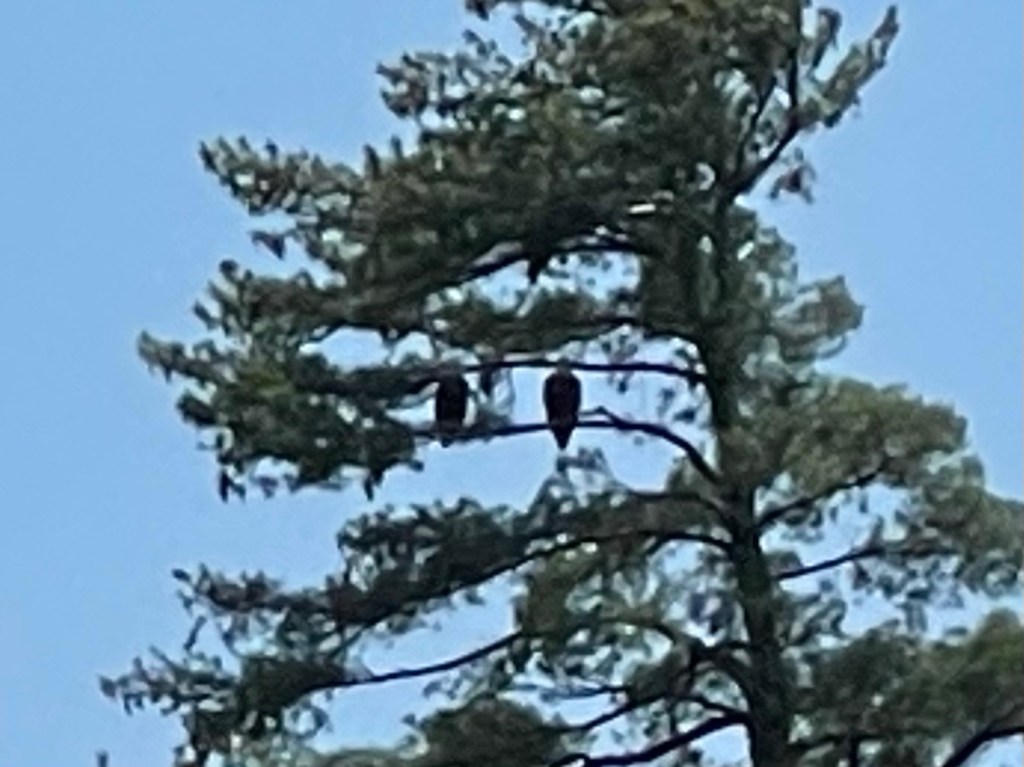
A pair of bald eagles
The cruise included a stop at I.W. Stevens Island, where we disembarked and walked among the old cabins from one of the earliest resorts that once operated on the island. This one-man resort, built and operated solely by Mr. Stevens, hosted guests soon after he purchased the island in 1939 and continued until 1959. Thereafter, he lived alone on the island for twenty more years before passing at the age of 94.
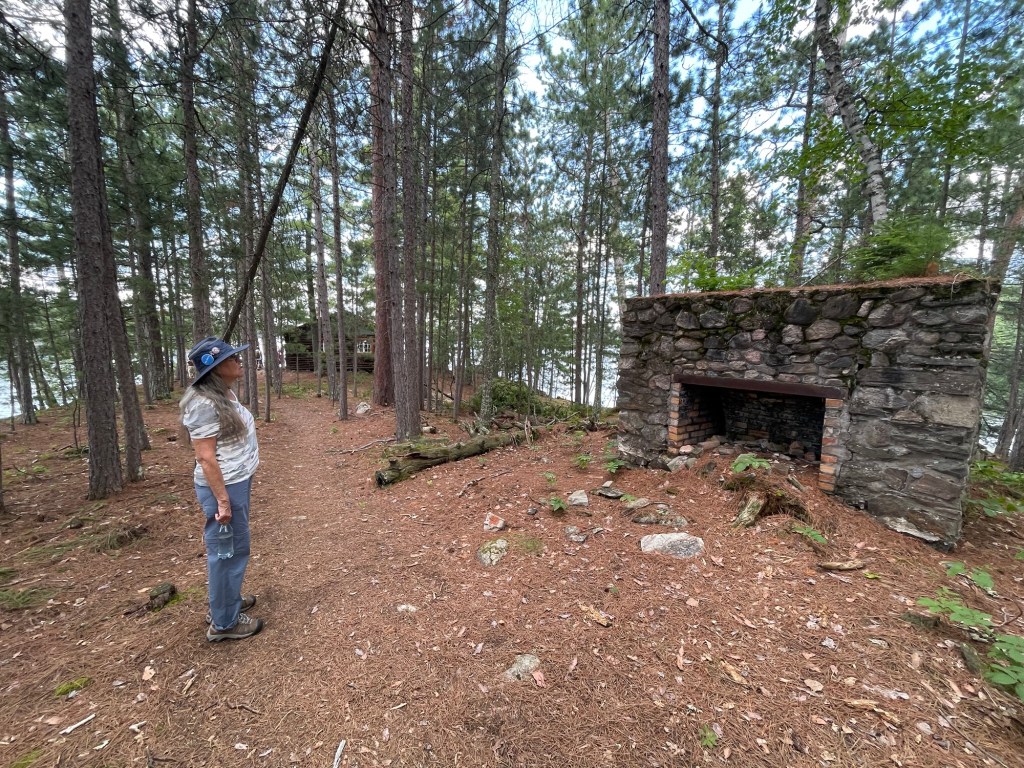

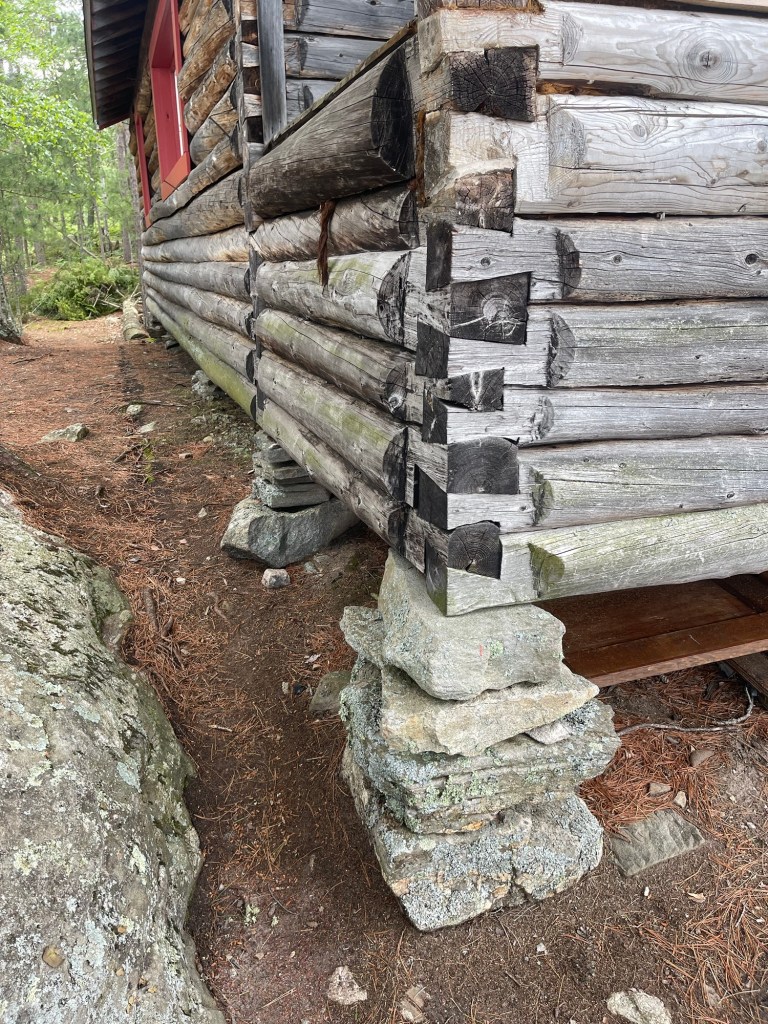
The cruise continued into Hoist Bay, where we circled around exploring the location of an old logging camp. The historic site is where logs, after being floated from upstream, were hoisted out of the water onto railroad cars. The pilings from the old railroad trestles can still be seen sticking out of the water.

Fishing with a Guide – I said I would include the good, bad, and ugly. Well, here is some of the bad and ugly. One of the things I’d hoped to do while at Voyageurs and the second planned excursion onto the water was to hire a fishing guide for a day trip. I envisioned a day filled with catching my limit of walleye and pike. The friendly owner of The Pines of Kabetogama Resort gave me a list of local guides to call. Maybe I should not have been surprised, but as I went down the list, all the guides I called were booked for the entire time we were there.
Luckily—or so I thought—one of the guides called back the next day to say he had an opening come available for a half-day morning trip on Sunday. I scheduled the trip. Sunday morning, Grammi and I woke to gloomy weather and a bleak forecast, but we readied ourselves with raingear and determination. The guide arrived on time. We stepped aboard and left the dock hoping for the best. While crossing the lake, the guide abruptly stopped and said the weather was too dangerous, so we returned to the dock. This was the fishing trip that almost was.

Lunch at Arrowhead Restaurant and Bar – More of the good, bad, and ugly. We found several unique places to eat while we were there. This one stands out for its location on Kabetogama Lake. Boaters come to the dock and disembark for lunch—we drove a narrow, winding road to get there. Available tables on an outside patio deck provide a relaxing view of the lake, but the flies kept us indoors. The fish platter Grammi had was good, but the hamburger I ordered was undercooked and had to be sent back to the kitchen. We found better places to eat during our time in the area, but none with the atmosphere and panoramic view like this one had.

International Falls – A trip to International Falls provided a day of exploring and adventure. Located at the Canadian border was Border Bob’s—the last building in the U.S.—or so they say. It’s a large souvenir/gift shop with a selection of everything from A to Z. We stopped and spent an hour or so browsing around and left with a tee-shirt.

We stopped at Smokey Bear Park, which had a giant statue of Smokey Bear. Located at the park, we found the Koochiching County Historical Museum and Bronco Nagurski Museum. I don’t remember ever hearing of Bronco Nagurski, but he is an NFL Hall of Fame football player and a professional wrestling star from before my time who called International Falls his home.


Rainy Lake Visitor Center – Located on the shore of Black Bay with a scenic view across Kabetogama Peninsula, Rainy Lake Visitor Center serves visitors on the northern side of the park. More national park boat tours depart from this location; however, you’d better book a tour well in advance. We tried buying tickets online two weeks ahead of time, but they were all sold out. That didn’t stop us from visiting to see the nature exhibits and the scenic view of the bay.

About a half-mile from the visitor center, we took a hike on the Tilson Creek Bogwalk, but honestly, we didn’t make it too far before the mosquitoes found us, and we made an about-face and double-timed it back to the truck.

Wilson Creek Bogwalk
Conclusion – Our visit to Voyageurs National Park was a mix of unexpected challenges and memorable moments. While the weather and relentless mosquitoes tested our patience, the park’s natural beauty and rich history offered glimpses of what makes this place special. Despite the soggy conditions and missed opportunities, we took valuable lessons from our experience. If we were ever to return, we’d likely plan for the fall, when it is cooler and hopefully less buggy and perhaps, we’d rent a houseboat to fully immerse ourselves in the vast network of waterways that define Voyageurs. Every trip comes with its share of ups and downs, but it’s those very moments that shape our memories and make each adventure unique. Until then, we’ll carry the memories of our adventure at Voyageurs and look forward to the next destination on our journey.

Until next time—happy days and safe travels.
 The Adventures of Grammi and Grampa
Thanks for this post. I don’t know if we’d ever visit there, but after reading this, we would go in the Fall. Mosquitoes love me, and I would be miserable. You two made the best of it. This is a great approach as travels include not only those great social media posts, but also those challenging, realistic moments when all does not go as planned. It’s all part of the package. Safe travels!
LikeLike
I’m enjoying your blogs of the places you are visiting. Between the pics and descriptions it’s almost as if I’ve been there. Would you consider writing a blog for our HCFR RVers and adventurers?
LikeLike